Preparing for scene study means arriving with more than memorized lines. By class day you want the scene mapped, a clear objective and obstacle, the moment where it turns, your logistics settled with your partner, and one real question to test in the room. Memorization comes last, not first — that order is what keeps lines from dropping under pressure. This is a repeatable workflow for any assigned scene: read for what changes, make four actor decisions, coordinate with your partner, then plan backwards from the class date.
Read the Scene Once and Define What Changes
Before any decisions, read the scene once — all of it, your partner's lines included — and answer one question: what's different at the end than at the start? A scene is a negotiation that shifts something. If nothing changes, you've misread it.
Write the change in a single sentence. "She arrives asking for a favor and leaves having threatened him." "He starts the scene certain he's right and ends it doubting himself." That sentence is your spine. Every choice you make in class should serve it.
Then find the turn — the moment the scene tips from one state to the other. Most short study scenes have one clear pivot. Mark it in the text. That pivot is where your work gets judged, because it's the hardest thing to play honestly when you're nervous and off-book.
Make Four Actor Decisions: Objective, Obstacle, Beat Shift, Opening Action
Class expects you to arrive with choices already made, not to discover the scene in front of everyone. Make these four decisions and write them into your script before your first read-aloud.
Use a running example: a two-person scene where Nadia asks her older brother Sam to cover a debt he doesn't know the reason for.
1. Objective — what you're trying to get. State it as an active verb aimed at the other person, not a feeling. Not "I want to feel less ashamed." Instead: Nadia — get Sam to say yes before he asks what the money is for. An objective you can fail to reach is an objective you can actually play.
2. Obstacle — what's in the way. Name the specific resistance. Sam — he's been burned lending money before and promised his wife he'd stop. The obstacle is why the scene lasts longer than one line. If you can't name it, the scene has no tension and the class will feel it.
3. Beat shift — where the tactic changes. A beat ends when something turns: new information, a new tactic, a change in power. Label each turn in the text:
- Beat 1 — Charm: "You always said family covers family."
- Beat 2 — Guilt: "You weren't there the last time I needed you."
- Beat 3 — Threat: "Fine. I'll ask Mom, and I'll tell her why."
The beat shift is the scene's engine. Memorize the words but not the turns and the change feels arbitrary the moment you're under pressure. If you want a deeper method here, see objectives and tactics.
4. Opening action — what you're doing on the first line. Not the emotion, the action. Nadia's first line plays as testing the water, not pleading. Deciding the opening action stops you from starting every scene at the same flat "neutral" — the vague top that class notes always call out.
Coordinate With Your Scene Partner Before Class
Scene study work is shared. If you and your partner arrive with different assumptions, you both lose time, sometimes in front of the class. Settle these before your first rehearsal together:
- Cuts. Agree on exactly which lines you're cutting to hit the time limit, and mark the same cuts in both scripts. Nothing derails a presentation like one actor honoring a cut the other forgot.
- Props and furniture. Decide the two or three items you actually need — a chair, a bag, a phone — and who brings them. Don't build the scene around props your classroom won't have.
- Starting positions. Agree where each of you is, and what you're doing, when the scene begins. The opening image is the first thing the class reads.
- Rehearsal time. Book your run-throughs now. Two students rarely have overlapping free time by accident — find it early. Aim for at least two rehearsals on your feet before class, not one panicked run an hour before.
Send your partner your beat labels and your read on the turn. You don't have to agree on everything, but you both need to know where the scene pivots.
Build the 5-10 Day Class-Deadline Plan
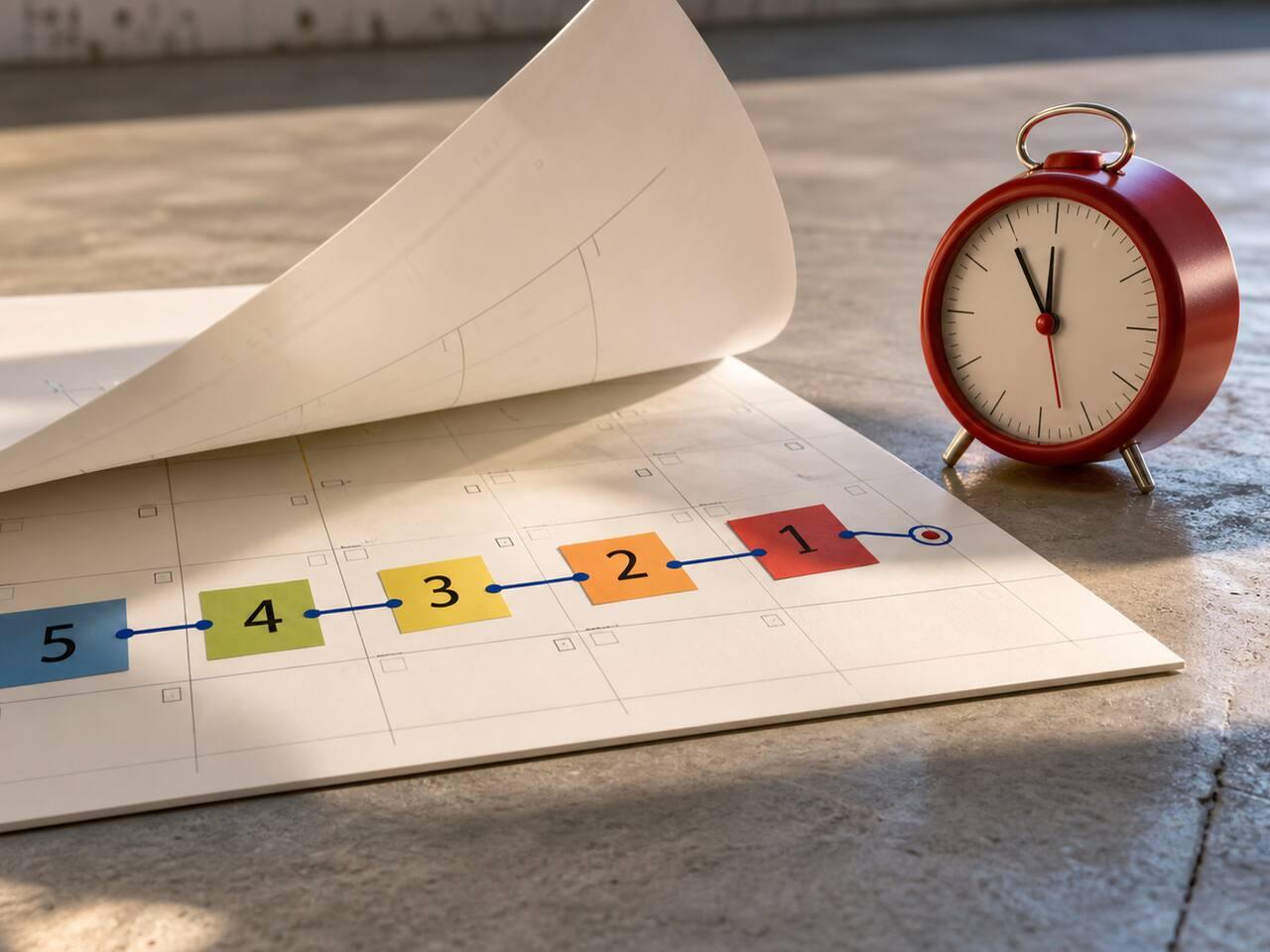
Work backwards from the class date, never forwards from today. This backward plan is the backbone of scene study preparation.
Day 1 — set up the text. Get the scene into a format you can mark, rehearse from, and share with your partner. If it's a clean digital file, you're ready. If it's a photocopy or a scanned PDF where you can't select the text, transcribe the scene into a clean document or use a converter, then verify the character names and cue lines before you trust it. Do this once, on day one, so you never fight the format again. For deadline logic in more detail, see off-book for acting class.
Then follow the schedule:
| Days before class | Goal |
|---|---|
| Day 7-10 | Text set up. Scene read for what changes. Four decisions made and written in. |
| Day 5-6 | Rough memorization with the script in hand, cue line by cue line. |
| Day 3-4 | Off-book for your sections. First rehearsal on your feet with your partner. |
| Day 1-2 | Full scene off-book. Fix drops. Second rehearsal. |
| Class day | Decisions made, lines secure, logistics sorted. |
The rule that keeps this from backfiring: don't start memorizing until the four decisions are made. Learn the words before you know what you're doing and you'll recite text instead of playing an action — and it shows the instant a classmate gives you a different reading.
When you test off-book, note where a line drops. A drop at a beat shift usually means the decision there isn't clear enough yet — go back to the analysis, not just the words.
Before class, run this quick check:
- [ ] The scene is in a workable format
- [ ] What changes is written in one sentence
- [ ] Objective, obstacle, beat shift, and opening action decided
- [ ] Cuts, props, and starting positions agreed with your partner
- [ ] At least two rehearsals on your feet
- [ ] Off-book, with drops fixed
- [ ] One real question ready to test in the room
For a printable version, see the scene study checklist.
Do it in HitCue
- Character focus view: keep your assigned role and its cues in front of you while you lock the objective, obstacle, and beat turns — instead of scrolling the full scene each time.
- Blackout mode: in your last prep days, test the scene one line at a time and see exactly where a line drops at a beat shift.
- Shared notes: send your beat labels and agreed cuts to your scene partner, so you both walk into class working the same scene.
Import your scene, write your four decisions in, and run your first Blackout test on days 3-4. → Download HitCue