A first rehearsal checklist should help you arrive oriented, not over-prepared. Your job in the room is to listen and absorb decisions, not to walk in with the character already locked. So the checklist has three parts: what to prepare before the session, what to capture while it's running, and what to lock in during the first half hour after it ends. Get those three right and you'll show up to the second rehearsal with a plan instead of a pile of half-legible notes.
Before the First Rehearsal: Arrive Oriented
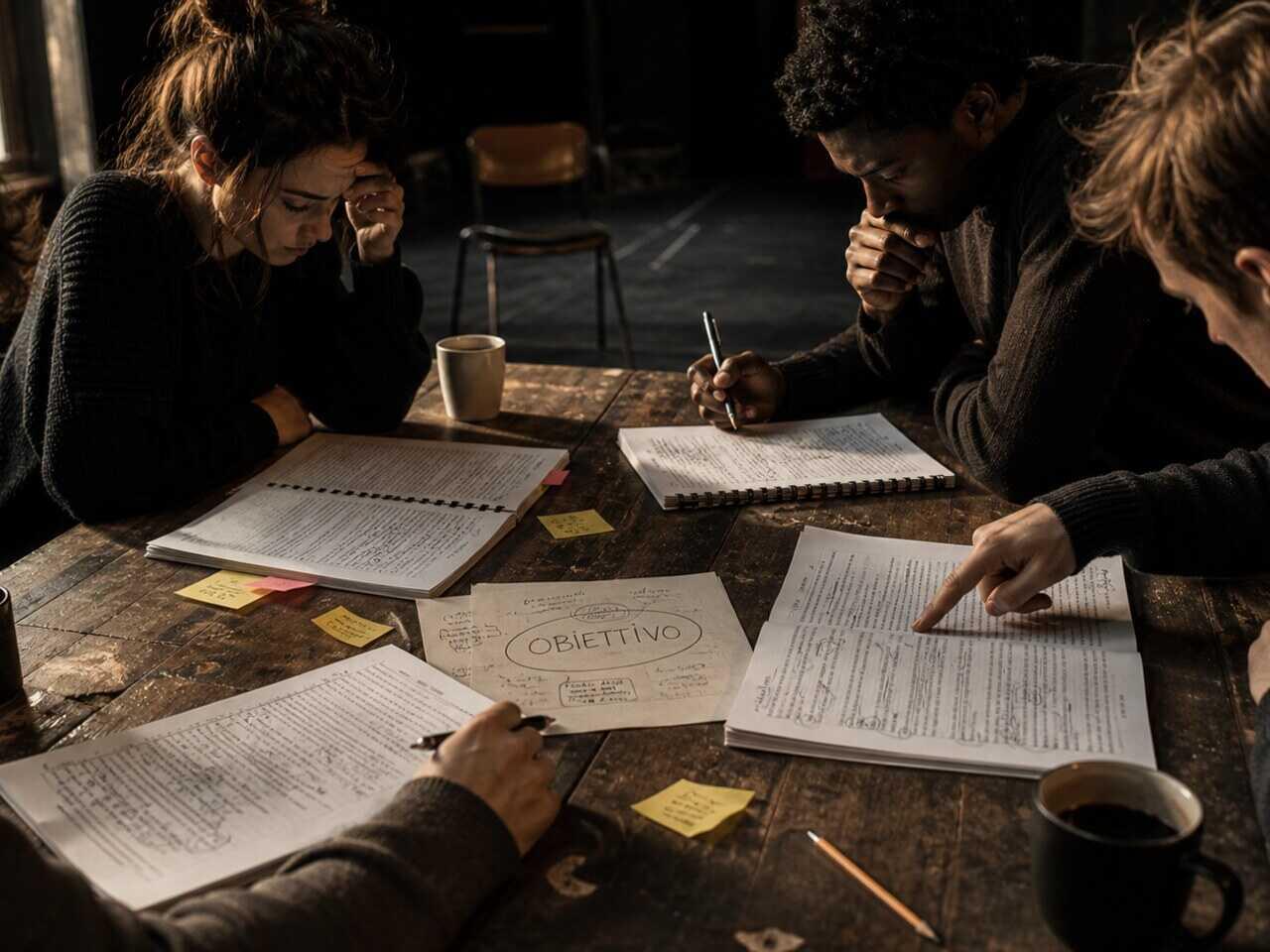
Preparation before a first rehearsal isn't about answers. It's about arriving with a script you can take notes in and the right questions to ask. Most of this is table work — the preparation that happens before you're on your feet.
Work through this before the call:
- Keep one working copy. Decide now which copy of the script is the one you'll mark — the one that comes to every rehearsal. A printed script, a marked-up PDF, one document, it doesn't matter which. The failure mode is two copies: cuts on the PDF, notes in a notebook, and a week later you can't tell which is current. One copy, every mark in it.
- Read the whole script once, for orientation. Not to memorize — to know the story, the world, and the tone. When the director talks about the play, you want to follow the references, not flip pages hunting for the scene.
- Mark every scene you're in. If the production hasn't sent a scene breakdown, build a rough one from the text. You need to see your full load at a glance before you can plan anything.
- Set up notes by scene, not by page. However you take notes, make it easy to attach one to a specific scene. A note tied to its scene resurfaces when you open that scene to work. The same note in a running chronological list never gets read again.
- Bring tools that keep decisions from drifting. Bring the working copy, a pencil or reliable annotation setup, the rehearsal schedule if you have it, and any prop or costume piece you've already been asked to use. Don't bring three backup systems. If a cut, blocking note, or partner agreement happens in the room, it needs one clear place to land.
- Write 2-3 real questions. Not analysis — the things the text leaves open. Why does my character stay in the room instead of leaving? Write them down and listen for answers in the room, even when they're aimed at someone else.
- Confirm the schedule and the off-book expectation. Find out when the director wants you off-book and when your first scene goes on its feet. If nobody has said it, ask in the first session. Knowing the off-book date is what lets you plan backwards instead of cramming later.
What to Capture in the Room
Directors say the most important things once and move on. Some of those offhand remarks are worth more than a week of solo rehearsal. Your job is to catch them before they evaporate — and to put each one in your working copy, tied to the scene it belongs to.
Director framing and tone. Listen for how the director describes the world of the play, not the plot. Write the images verbatim. "This scene should feel like two people waiting for the other to crack first" tells you more than any adjective. Capture the register they keep returning to, and the references they reach for.
Cuts and rewrites. Cuts get called in the room and forgotten by morning. Write them into the script the moment they're named — in the working copy, not on a loose sheet that won't survive the week.
Blocking. If movement is set, note the scene, roughly where you stand relative to whom, and any move tied to a specific line. You don't need a diagram, just enough to reconstruct it at home.
Relationship notes. Anything the director says about how your character relates to another — power, history, subtext — even when the note is given to the other actor. Notes handed to your scene partner often reshape your character more than notes handed to you.
Scene-partner agreements. When you and a partner decide something together — who initiates a moment, where a beat turns — write it down and make sure you both have it. Two actors carrying different notes into the next session are rehearsing two different scenes.
Your own reactions. What surprised you when you heard the scene read aloud? What doesn't track yet in your character's logic? These become your questions for next time.
The 30-Minute Post-Rehearsal Cleanup
The half hour after a first rehearsal is the most valuable time most actors waste. Notes made under pressure decay fast. Spend 30 minutes before you go to bed and you save yourself an hour of confusion later.
- Rewrite anything illegible. Shorthand makes sense for ten minutes; after that it's archaeology. Rewrite while you still remember what you meant.
- Assign every note to its scene. Move each note to the scene it belongs to. This is the step that pays off across the whole rehearsal period — you're building a script where the context is already waiting where you'll need it.
- Flag open questions. Mark anything you need to clarify before you can commit to a choice. Don't guess what the director meant — write the question and ask at the next session.
- Message your scene partners. Send the agreements and any relationship note you both need. One message now prevents fifteen minutes of re-litigating it at the top of the next rehearsal.
- Update your off-book plan. You now know the full scene list, your scenes, and the schedule. Set your targets backwards from the first on-its-feet run and the off-book deadline, the way an off-book rehearsal plan is built.
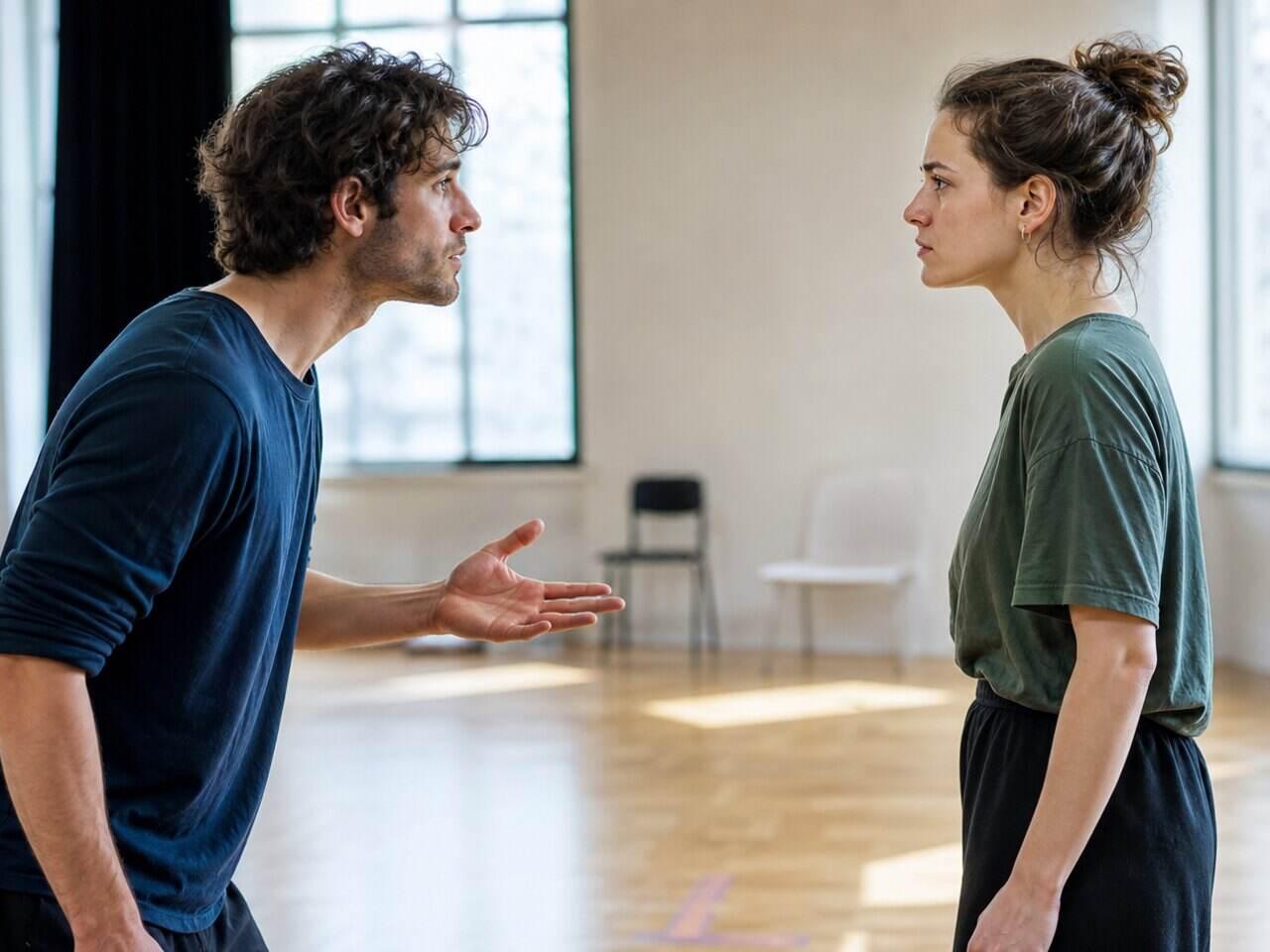
Here's the loop in practice. You're going into a first rehearsal for a two-hander — a tense confrontation at the end of act one. Beforehand you read the script twice, marked your two scenes in the one copy you'll bring, and wrote a single question: why does my character stay? In the room, the director says the scene should feel like two people waiting for the other to crack; you write it verbatim. There's a cut — four lines gone on page 34 — and a blocking note: you sit on the first line, stand on the fourth. After the room clears, you rewrite both notes, pin them to the scene, message your partner the cut and the framing, and set your off-book target to the next run date. Fifteen minutes, and the second rehearsal starts from a plan.
The Full First Rehearsal Checklist
Copy this and work top to bottom.
Before the session
- [ ] One working copy chosen — every mark goes in it
- [ ] Pencil or annotation setup ready
- [ ] Rehearsal schedule available if already shared
- [ ] Requested props or costume pieces packed
- [ ] Whole script read once for orientation
- [ ] Every scene you're in marked
- [ ] Notes set up by scene, not by page
- [ ] 2-3 real questions written down
- [ ] Schedule and off-book expectation confirmed
In the room
- [ ] Director framing and tone, captured verbatim
- [ ] Cuts and rewrites marked in the script immediately
- [ ] Blocking — scene, position, line-specific moves
- [ ] Relationship notes, including notes given to others
- [ ] Scene-partner agreements written and shared
- [ ] Your own reactions and new questions
Within 30 minutes after
- [ ] Illegible notes rewritten
- [ ] Every note assigned to its scene
- [ ] Open questions flagged
- [ ] Scene partners messaged
- [ ] Off-book plan updated from the schedule
Do it in HitCue
- Scene notes: pin each director note, cut, and blocking mark to the exact scene it applies to, so the context from the room is waiting the next time you open that scene to work.
- Shared notes: send scene agreements and the director's framing to your scene partner, so you both arrive at the next rehearsal with the same notes instead of two versions.
- Scene navigation: jump straight to any scene to review what was decided or run a targeted pass, without scrolling through the whole script.
Import your script before the first session and capture every note in the scene it belongs to. → Download HitCue