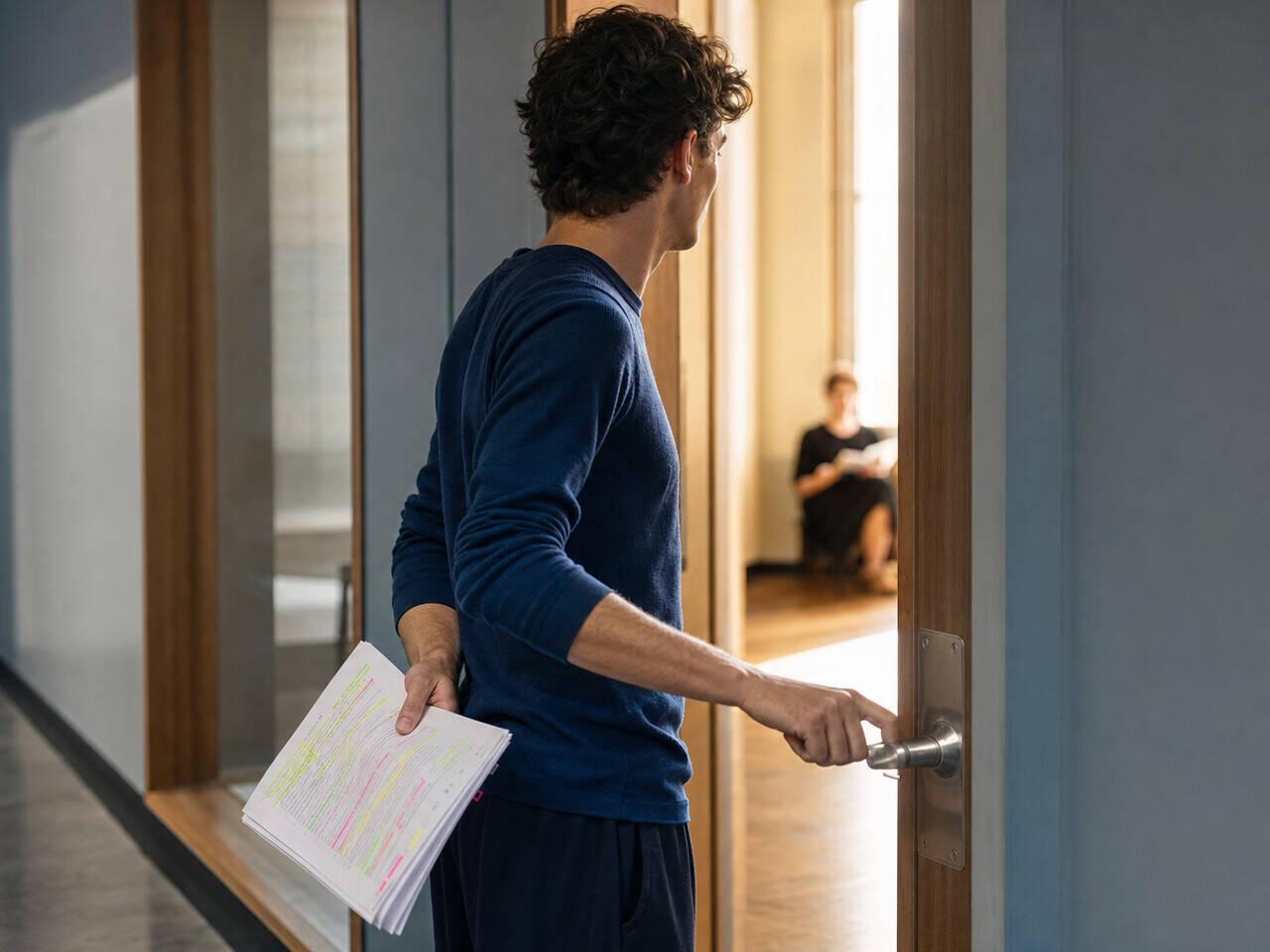
This hub is for acting students who have a scene, a deadline, and limited time to turn the text into work they can bring into the room. The guides focus on repeatable workflows: first read, question lists, beat marking, partner coordination, off-book planning, classroom checklists, and what to capture after feedback. The goal is not to sound prepared. The goal is to make decisions you can act, test, revise, and bring back next class.
Start with the scene study checklist if the assignment is close and you need to know what must be ready before you walk in. Use the full preparation workflow when you have several days and need to connect parsing, analysis, and off-book planning in the right order. Future guides in this category should cover acting-class deadlines, partner notes, and how to keep feedback from disappearing after the session.
A useful student workflow keeps three layers separate. Text work tells you what happens. Character work tells you what you are trying to do. Rehearsal work tests whether those choices survive when you speak the scene out loud. If one layer is missing, the scene usually shows it immediately in class.
The other challenge is continuity. A scene may come back for several weeks with new feedback each time, and students often lose the thread between classes. Keep a record of what changed: which objective was challenged, which beat became clearer, where the teacher asked for a different tactic, and which line still drops under pressure. Scene study improves faster when each class builds on the last one instead of starting over with a vague memory of the notes.
That record becomes your rehearsal map.
Use This Hub When
Use these guides when the context is class, conservatory, coaching, or assigned scene study. If you need deeper character analysis, move to Script Analysis. If you already understand the scene but need to be off-book by a date, use Off-Book Planning. If you need to work without your partner, use Solo Rehearsal.