Running lines alone works — if you know what to replace your partner with. Most solo runs fail not because you lack a scene partner, but because there's nothing to respond to. You hear your own voice in a loop and call it rehearsal. This article gives you two concrete systems — recording-based drills and cue-line practice — that rebuild the stimulus-response loop your memory actually depends on.
Why Solo Line Runs Break Down
When you run lines with a partner, you're responding to prompts. Their words trigger yours. Remove the partner and you lose the trigger — not just the company.
Reading the scene top to bottom isn't the same thing. It builds familiarity, not retrieval. Familiarity feels like knowing your lines until you're in front of a director and nothing comes. You knew them this morning. You can't find them now.
The problem is that recognition and retrieval feel identical when you're studying alone. Recognition fires when you read a line and think "yes, that's right." Retrieval fires when you produce the line from a prompt with nothing to look at. Only retrieval works on stage.
Both methods below create retrieval conditions without a partner. One uses audio as the prompt. The other uses the written cue. Neither requires more than your script and a phone.
The Recording-Based Drill
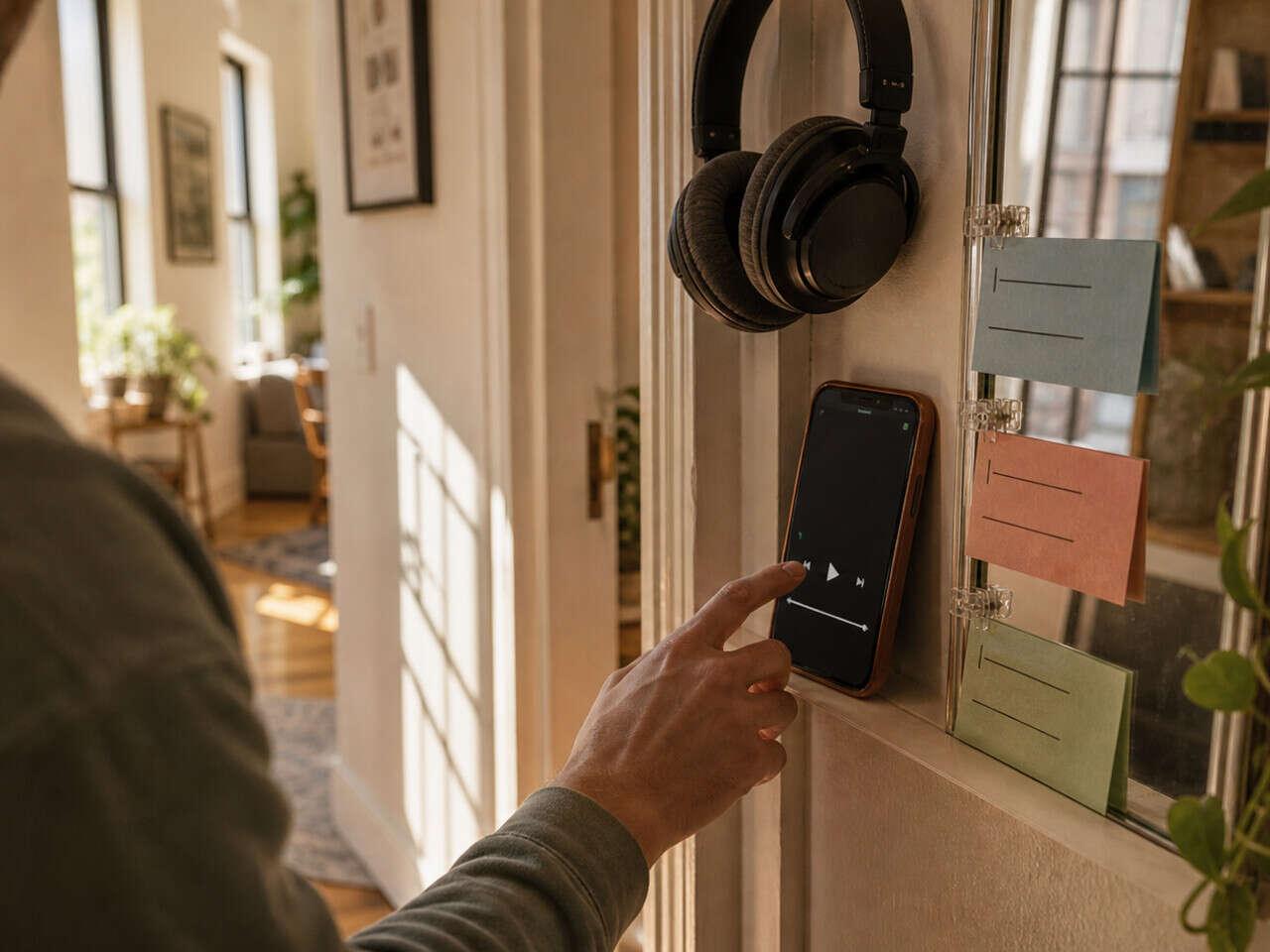
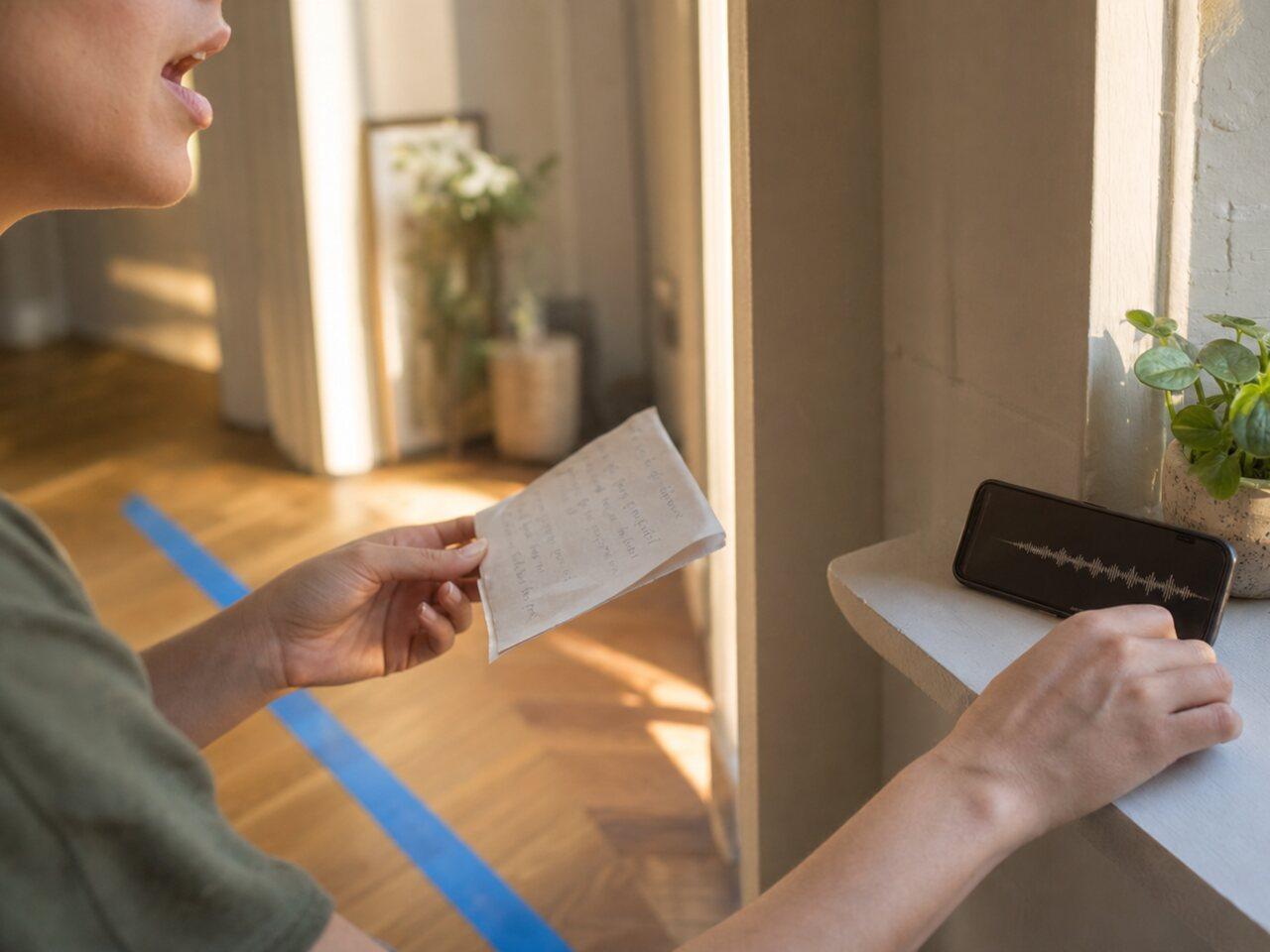
A recording-based drill replaces your scene partner with audio. You record the other characters' cue lines — just the lines that immediately precede yours — then rehearse your responses in real time against the playback.
Here's the setup:
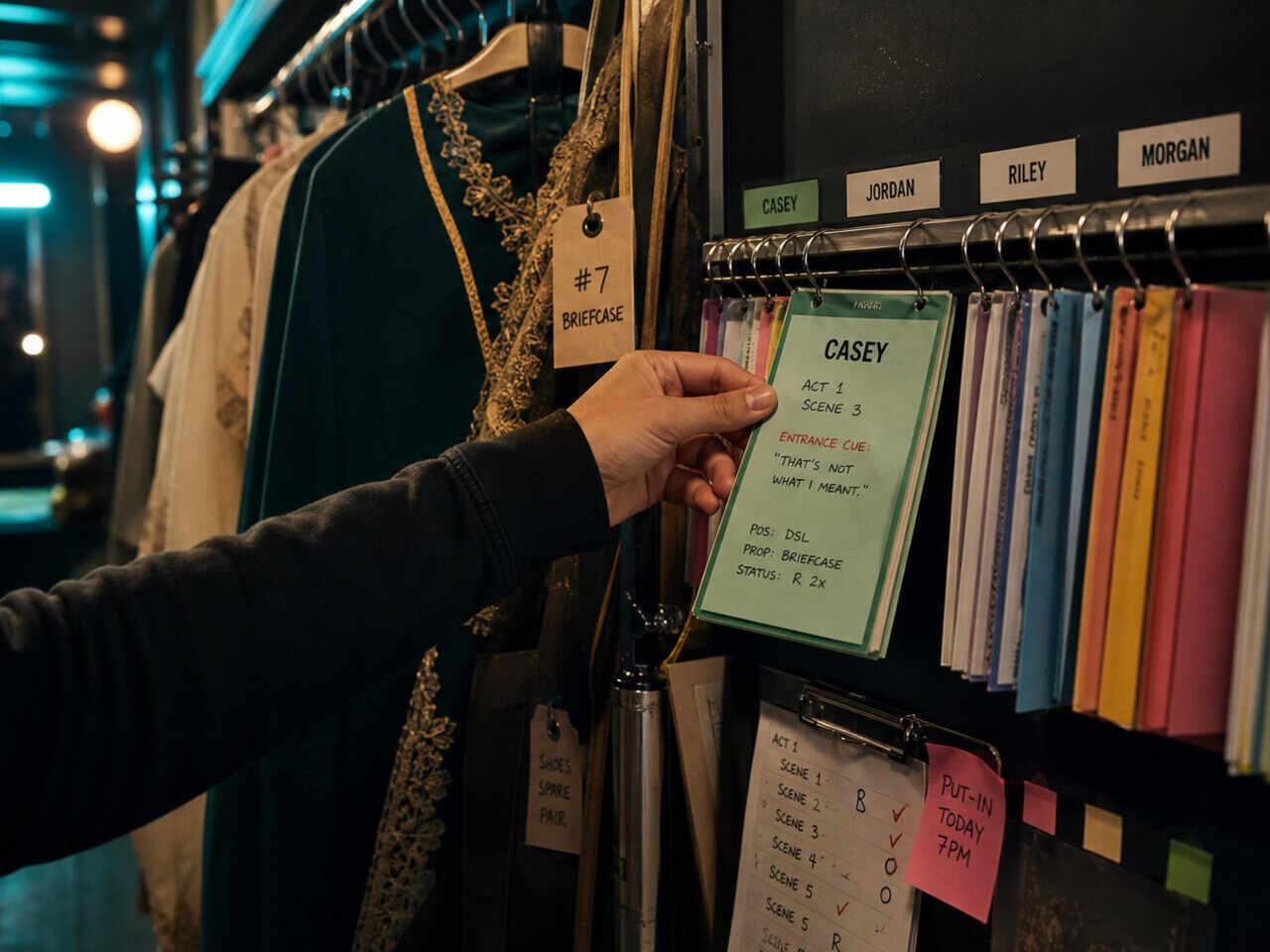
- Identify your cue for each line. The cue is the last phrase or sentence spoken before you enter — the trigger that fires your response. Write them out or mark them in your script before recording anything.
- Record only the cue, not the full speech. You don't need the other character's entire monologue. Record the last sentence, or the key phrase that launches your response. Shorter prompts create sharper reactions.
- Leave a pause after each cue. When recording, wait 4–6 seconds after each cue. That gap is your response window. Leave more time at first and tighten it as your retrieval speeds up.
- Speak your responses out loud, at full volume. Not under your breath. Not in your head. The physical act of speaking builds different memory pathways than silent reading.
- Isolate what's breaking, not the whole scene. When you hesitate on a response, stop. Repeat that cue-response pair five times before continuing. Don't re-run the full scene — that dilutes the work.
Here's what that looks like with a short original example. The exchange before your line is:
OTHER CHARACTER: "You knew exactly what you were doing." YOUR LINE: "No. I thought I did."
You record: "You knew exactly what you were doing." — pause four seconds — then speak your response out loud. If you hesitate, drill that pair five times before moving on. Don't return to the top of the scene.
This method is most effective in the 10 days before you need to be off-book, when your lines feel familiar but collapse under pressure.
One caution when you record: use a neutral, realistic voice for the cues — not a dramatic reading. If you perform the other character, you start responding to your own inflection instead of the words, and you've trained a partner who won't be in the room. Flat and on-tempo is what transfers to rehearsal; a theatrical cue track just teaches you to wait for a delivery you'll never get.
Cue-Line Practice Without Recordings
If recording isn't practical — you're commuting, waiting, or don't have 20 uninterrupted minutes — cue-line practice is the alternative. It requires only your script and deliberate attention.
Step 1: Block your lines. Fold the page so only the other characters' text is visible, or hold a card over your lines. See only what precedes your response.
Step 2: Read the cue. Stop. Speak your line from memory. Don't look. Attempt it before checking anything.
Step 3: Check and correct. Reveal your lines only to verify. If you were wrong, read the correct text once, cover it again, and repeat from the same cue.
Step 4: Build sequences. Once individual cue-response pairs are reliable, work three or four exchanges in a row without checking. Then expand to full scenes.
The difference between this and just reading your script is the retrieval moment — that gap between seeing the cue and speaking your response. That gap is where memory actually gets trained.
Tracking what's broken
Both methods produce useful data. After each session, note two things:
- Which cues triggered hesitation?
- How many attempts before you responded without checking?
If a cue-response pair needs more than four passes in one session, mark it. Return to it the next day — spacing work across multiple sessions tends to stick better than drilling past the point of diminishing returns in one sitting. Once you hit three consecutive clean passes on a sequence, move on. You've got it. Work what's still broken.
This tracking habit is what separates productive solo rehearsal from time spent feeling like you're working. The solo rehearsal hub collects all the methods for building this kind of practice across a full production cycle.
Do it in HitCue
- Dialogue recordings: record the cue lines that come before your trouble spots, then replay them in sequence so the solo run keeps partner rhythm.
- Character focus view: keep the drill anchored to your responses while the recordings supply the stimulus, which prevents solo practice from becoming silent reading.
- Blackout mode: hide only the response you are testing, reveal it after the cue, and mark the exact line that failed retrieval.
Import your script, record your first set of cue lines, and run your first drill tonight. → Download HitCue