Knowing how to rehearse alone — no scene partner, no director, just you and the script before your next rehearsal — comes down to working in the right order, not just putting in more time. The routine that takes you from first read to off-book has three stages: understanding the play, mapping your character's logic, and testing yourself under real conditions. Skip a phase and you'll memorize words without context. Follow the sequence and your lines will hold when pressure arrives.
Start With a Full Read-Through — and Don't Touch the Lines Yet
Your first pass through the script is not a memorization session. It's a map-reading exercise.
Read the full script from beginning to end — your character's lines and everyone else's. Your goal is to understand the logic of the play: the major turning points, where tension builds, where your character's status shifts. Without this context, drilling isolated scenes means you're memorizing text without knowing why one line follows another. That's the slowest possible way to go off-book.
As you read, take notes on the action — not the dialogue. Write one sentence per scene that captures what happens: what changes, who wins, who loses ground. These anchor your memory when you drill later.
After the full read, mark every scene you appear in. List them in order. Note your character's objective in each one. This is the skeleton your memorization will build on.
After your first read, you should know:
- Which scenes you appear in and in what order
- Your character's main objective in each scene
- The two or three moments where your character's tactic or status shifts
Don't skip this step. Actors who go straight to drilling lines from page one tend to take longer to go off-book — and often lose their place when blocking pressure arrives.
Map Your Character's Lines Before You Drill
Now narrow your focus to your character's lines — but still don't try to memorize them yet.
Start with the beats. For each scene you're in, identify the shift points: where does your character change what they want, or change how they're going about it? Beats aren't decorative. They're the seams in the logic. Lines sit on top of beats. When you can reconstruct the beat sequence, the words follow.
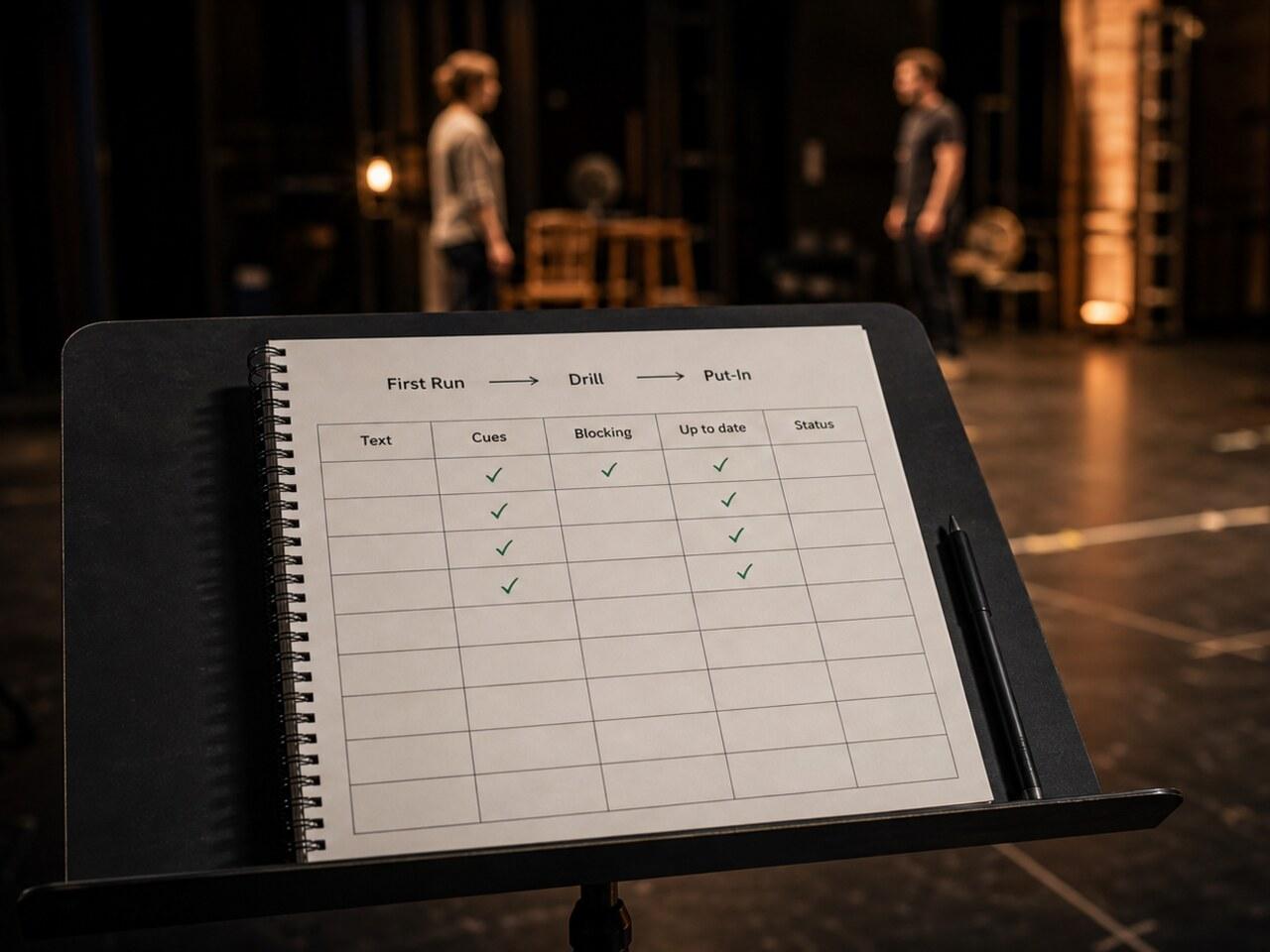
Next, mark your cue lines. A cue line is the last line of the preceding character's speech — the moment that triggers your response. Drill your cue lines separately from your full lines. You need to recognize the trigger before you can respond to it consistently.
Flag any lines that feel arbitrary — where the connection between what came before and what you say next isn't clear. These are the lines you'll drop in run-throughs. Don't try to fix them by repetition. Go back to the beat analysis. Find the logic. The line will follow.
This foundational work is what keeps your lines stable when pressure arrives — and it's what any solo rehearsal routine that works is built around.
Example: Take a two-person scene. Your character, Nora, has just heard news she wasn't expecting.
Alex: "I got the transfer. I leave in three weeks." Nora: "Three weeks. Right." Alex: "I thought you'd be happy for me." Nora: "I am happy for you."
The beat lands at Nora's second line — the scene shifts from absorbing the news to managing the conversation. Your cue line is "I thought you'd be happy for me" — that's the trigger. If you can't feel why Nora says "I am happy for you" with the weight she says it with, you'll flatten the line every time. Once you find the logic — Nora deciding to protect Alex from her real reaction — the line becomes hard to forget.
Run Lines Alone and Test If They Actually Stuck
Once you understand the logic and have your beats marked, you can start drilling — and you don't need a partner to do it well.
A solo line drill routine that works:
- Scene by scene, not full run. Drill one scene until you're solid on it before moving to the next. Don't attempt a full script run until each scene works independently.
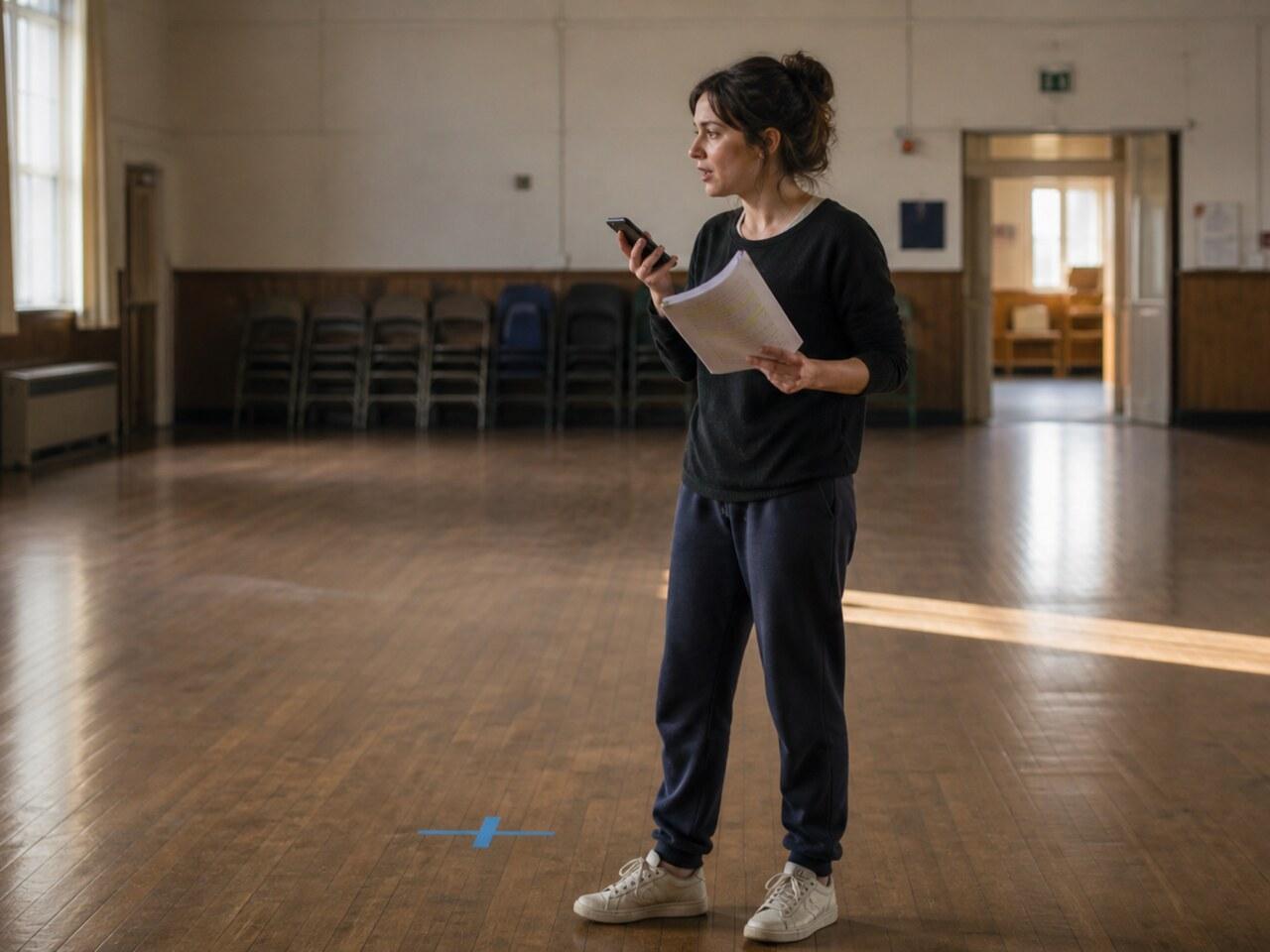
- Cover and speak. Cover the lines below the cue line. Read the cue line. Say your line from memory. Move on. Don't look down until you've made an attempt.
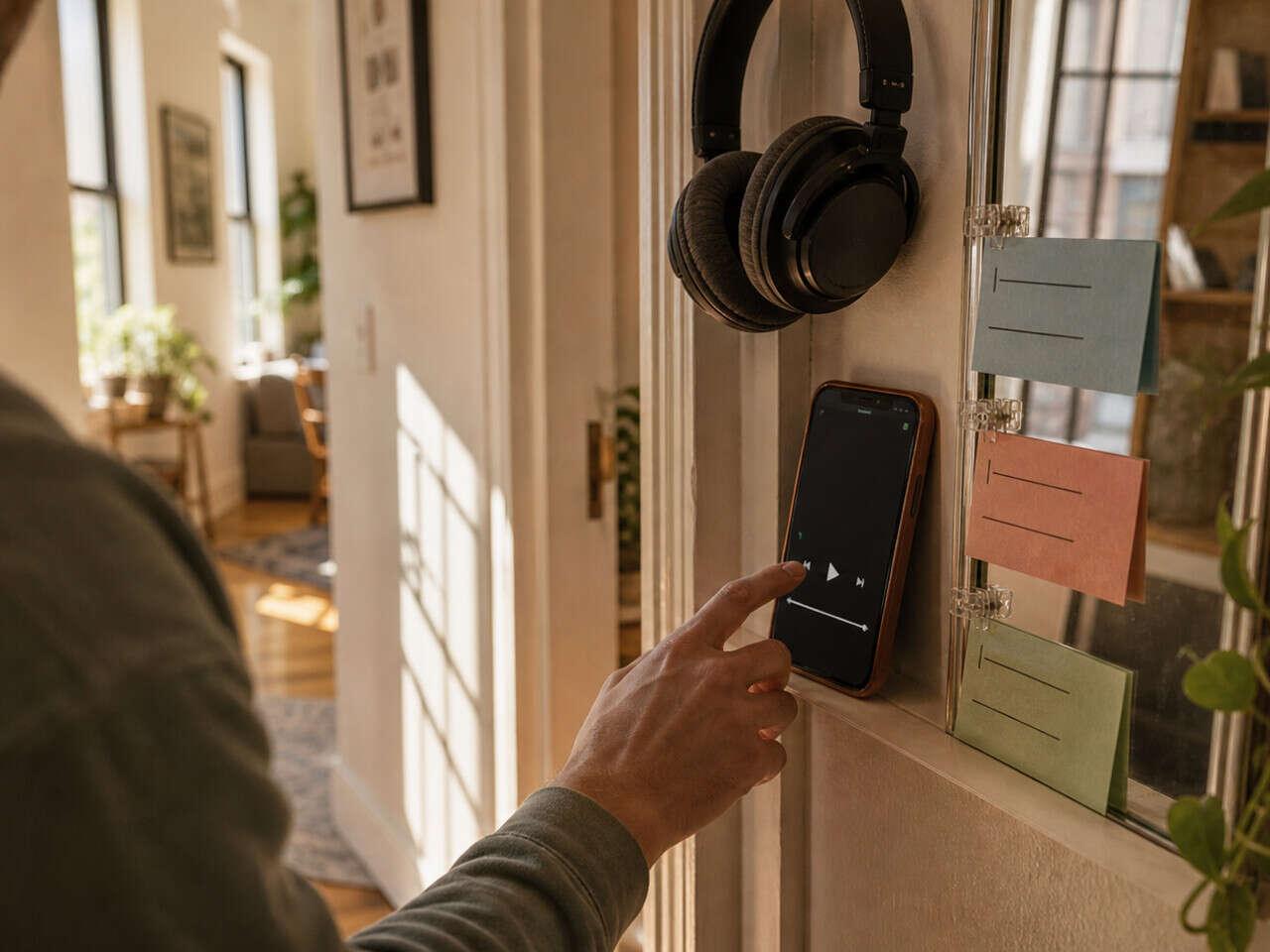
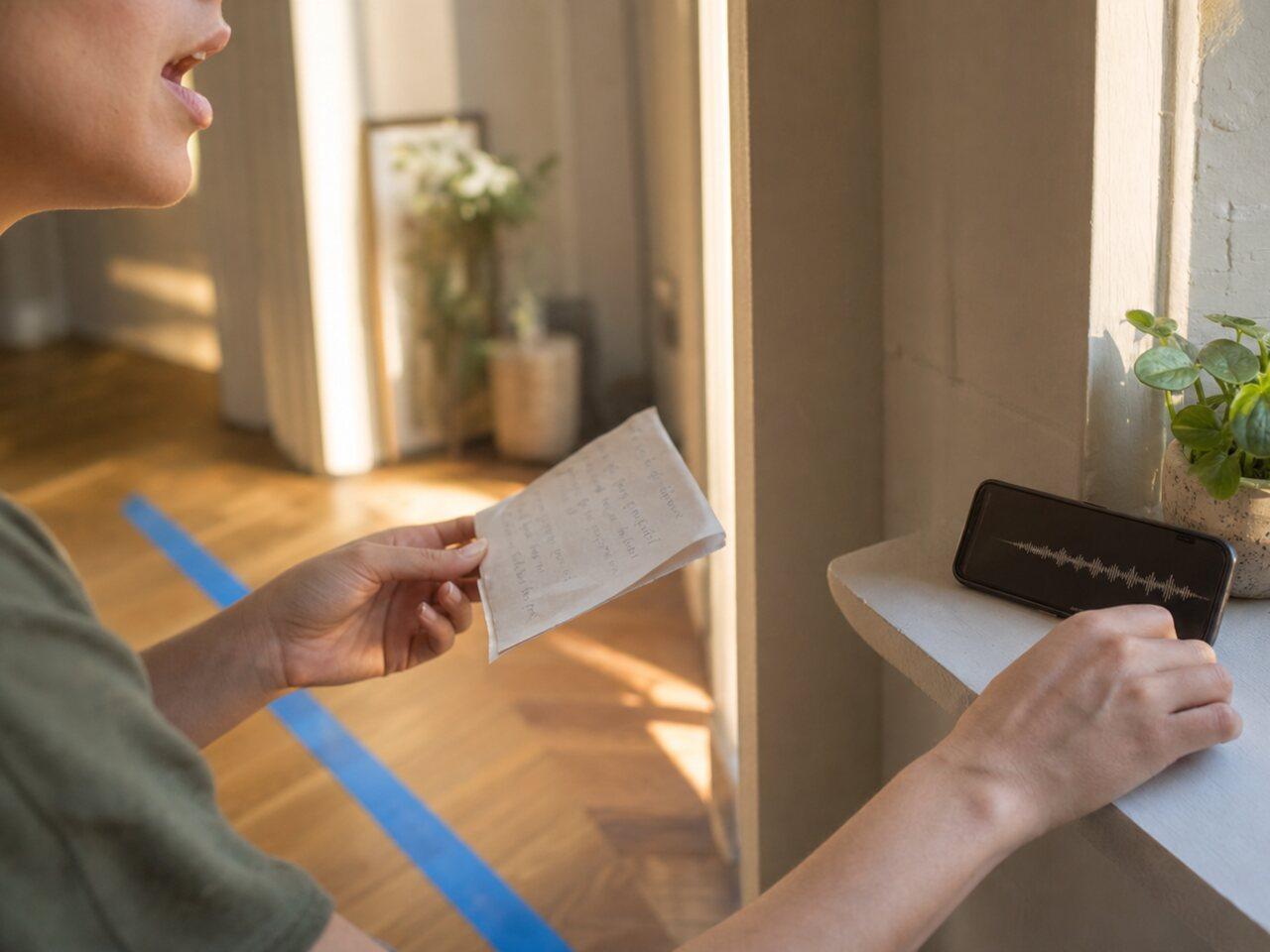
- Record the cue lines. Read all the cue lines for a scene into your phone, leaving a gap after each one. Play the recording back and speak your lines into the pauses. This simulates a real exchange without a partner.
- Passive exposure between sessions. Read over the scene once before sleep — don't drill, just absorb. A low-stakes pass before sleep tends to consolidate what you drilled without the fatigue of running it again.
Keep these recordings organized scene by scene, not as one long file. When a single take covers the whole act, you can't isolate the one exchange that keeps breaking — you end up scrubbing through minutes of audio to drill thirty seconds, and the drill quietly stops happening.
Testing: don't stop at "mostly there"
Drilling and testing are not the same thing. Drilling is practice with feedback. Testing is running under real conditions — eyes off the page.
Once you've drilled a scene three or four times, close the script and run it out loud from memory. Note every line you drop — don't stop, just keep going. After the full scene pass, go back and target only the dropped lines. Repair them one at a time before running the scene again. Targeted repair is faster than re-running the entire scene every time you miss something.
Set a clear threshold: you're not ready until you can run the scene completely, once, without looking down. If you're unsure whether you actually know it or are just convincing yourself, a cold test will tell you. The illusion of knowing and actually knowing feel very different the first time you close the page.
In the week before rehearsal, run the scenes in order. When you can do that without drops, you're ready to be in the room.
Do it in HitCue
- Character focus view: set up a solo session around your role's path through the scene, so you are not using practice time to search for the next exchange.
- Dialogue recordings: build the missing partner into the drill by recording cues scene by scene, then answering on playback without stopping the run.
- Blackout mode: end the session with a retrieval test that shows which lines survived the solo work and which only felt familiar.
Import your script, record your cue lines, and run your first solo drill session tonight. → Download HitCue