This hub is for the early rehearsal phase: first read-through, first rehearsal, table discussion, question lists, notes, and decisions that should survive into blocking and line work. The focus is practical because actors do not need more abstract discussion. They need to know what to capture, what to leave open, and how to carry the useful parts of the conversation into the next rehearsal.
Start with the table work guide if you need a clean framework before the first read-through. Use the first rehearsal checklist when the whole cast is gathering and you need to prepare, listen, capture, and align without losing details. Future guides in this category should cover table read notes, read-through rehearsal, and how to turn early questions into scene-specific choices.
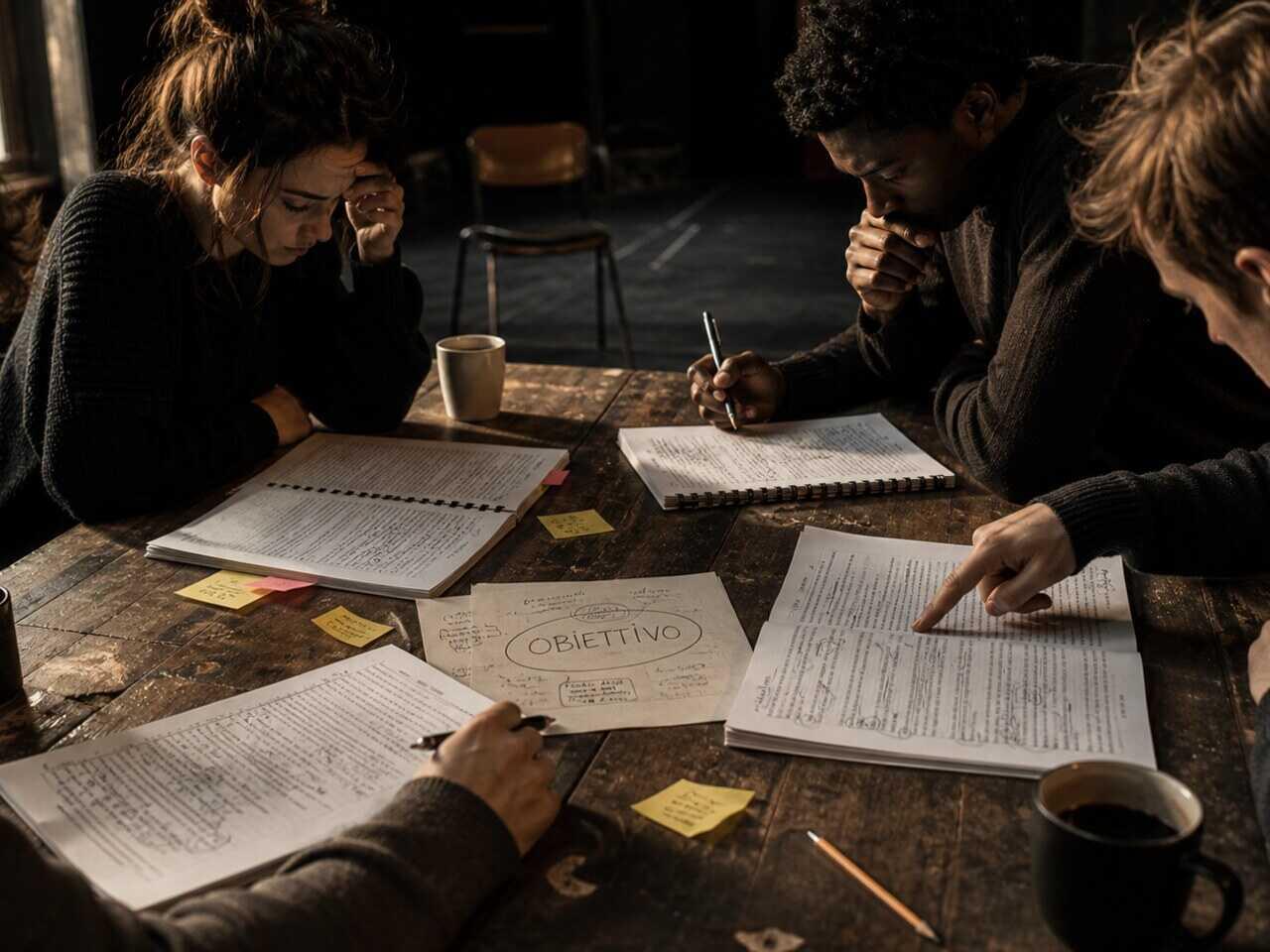
Good table work produces usable outputs. At minimum, you should leave with scene questions, relationship assumptions, open decisions, cuts or version notes, and anything the director has clarified. If the notes cannot help you rehearse tomorrow, they are probably too abstract.
The best early-rehearsal notes are provisional but organized. You do not need final answers to every question before blocking begins, but you do need to know which questions are still active. Keep open questions separate from decisions. Keep director notes separate from personal interpretation. Keep version changes visible to everyone who needs them. That structure prevents the first week of rehearsal from turning into scattered memory.
It also makes later line work faster.
Treat the table phase as the rehearsal system's setup pass: fewer assumptions now means fewer corrections when the cast starts moving through the first blocked scenes.
Use This Hub When
Use these guides before the rehearsal process becomes mostly physical. If your questions are specifically about beats, objectives, or character choices, continue into Script Analysis. If the issue is getting lines ready by a date, move to Off-Book Planning. If the issue is keeping notes attached to the script, use Script Annotation.