The system that works for acting class off-book deadlines starts at the end: count backwards from your class date, assign sessions by scene weight, and schedule your first self-test two days out — not the night before. Most students try to read their way into memorization, then discover the evening before class they're only halfway there. Familiarity isn't memory. This article gives you a 5-step schedule and the self-test methods that tell you whether you're actually off-book before you walk into the room.
Why the Night-Before Approach Fails Acting Class Deadlines
Most students treat off-book work as the last step. They read the scene a dozen times, get familiar with it, then try to run lines the evening before class — and discover they're only halfway there.
The problem isn't effort. It's that reading a scene and being able to perform it without the page are completely different tasks. Familiarity isn't memory. You can read the same scene twenty times and still drop lines under pressure in the room.
Acting class deadlines are also less forgiving than production timelines. In a production, blocking rehearsals give you structured repetition over weeks. In class, you often have five to ten days and no built-in partner sessions. If you don't create a system, you create a crisis.
The only way to avoid burning out at the end is to start testing yourself at the beginning — and to distribute the work across the week instead of stacking it at the end.
Build Your Off-Book Schedule From the Deadline Backwards
Before you memorize a single line, map out the work. This takes ten minutes and changes the shape of the entire week.
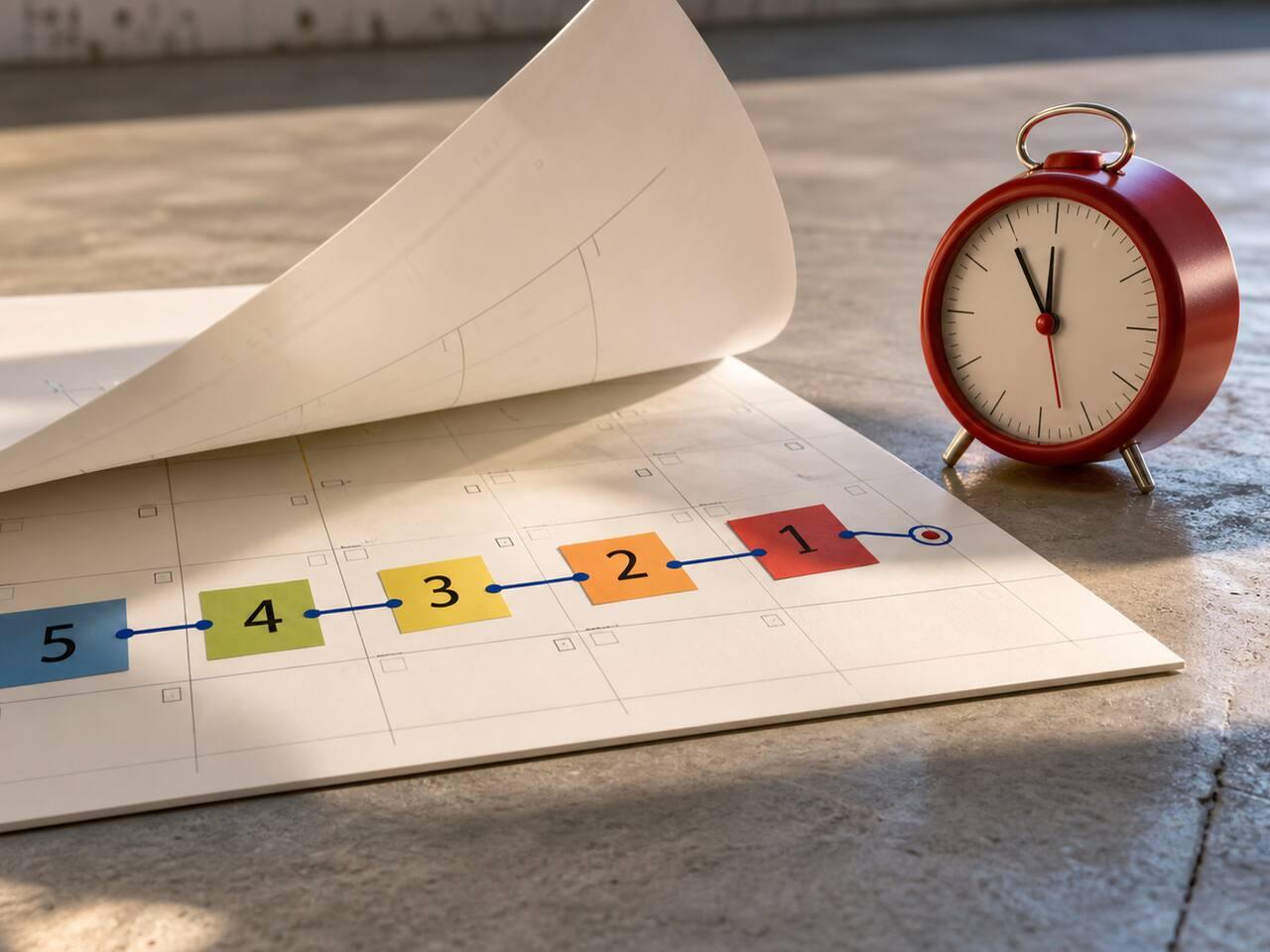
Step 1: Count your real available days. Take the number of days until your class deadline and subtract one. That last day is for full-run testing only — not new memorization. If your deadline is Friday and today is Saturday, you have five working days.
Step 2: Sort your scenes by weight. Heavy scenes: long, emotionally complex, or dense with cue sequences. Light scenes: short, clear, one clear objective. Assign each a weight — heavy, medium, or light. Don't skip this step. If you treat all scenes equally, you'll run out of time on the hard ones.
Step 3: Assign study sessions, not study days. A "day of studying" is vague. A session is specific: 25 minutes on Act 1, Sc. 2, running the first half. Schedule sessions, not days. Two 25-minute sessions on a heavy scene produce better results than one hour of unfocused reading.
Step 4: Schedule your first self-test two days before the deadline. This is the most important step. Running lines with a friend or testing yourself two days before the deadline gives you time to fix what's broken. Running them the night before doesn't. Mark the self-test date on your calendar the same way you mark the class date.
Step 5: Leave the final day for full-run confirmation only. No new memorization on the last day. If you're adding new material on the final day, the schedule has failed and you're back to cramming. The last day is for confidence — running the scene from top to bottom and confirming you're where you need to be.
A working schedule for a 5-day window with two scenes (one heavy, one light):
| Day | Work |
|---|---|
| Day 1 | First read of both scenes. Flag hard lines and cue sequences. |
| Day 2 | Heavy scene: first half, first pass |
| Day 3 | Heavy scene: full run + light scene first pass |
| Day 4 | Self-test both scenes. Fix gaps. |
| Day 5 | Full-run confirmation only. No new work. |
How to Test Your Lines Without Waiting for Class
The schedule only works if you actually test yourself — not just run lines in your head where you can always fill in the gaps unconsciously.
A real self-test means you can't see the page. There are a few ways to do this without a partner:
The cover-and-speak method: Go line by line, cover the page with your hand, say the line out loud, uncover to check. Not glamorous, but reliable for catching specific drop points.
Record and respond: Record your partner's lines (or use a text-to-speech reader). Play the cue, stop the recording, and deliver your line before pressing play again. This mimics the real pressure of waiting for a cue.
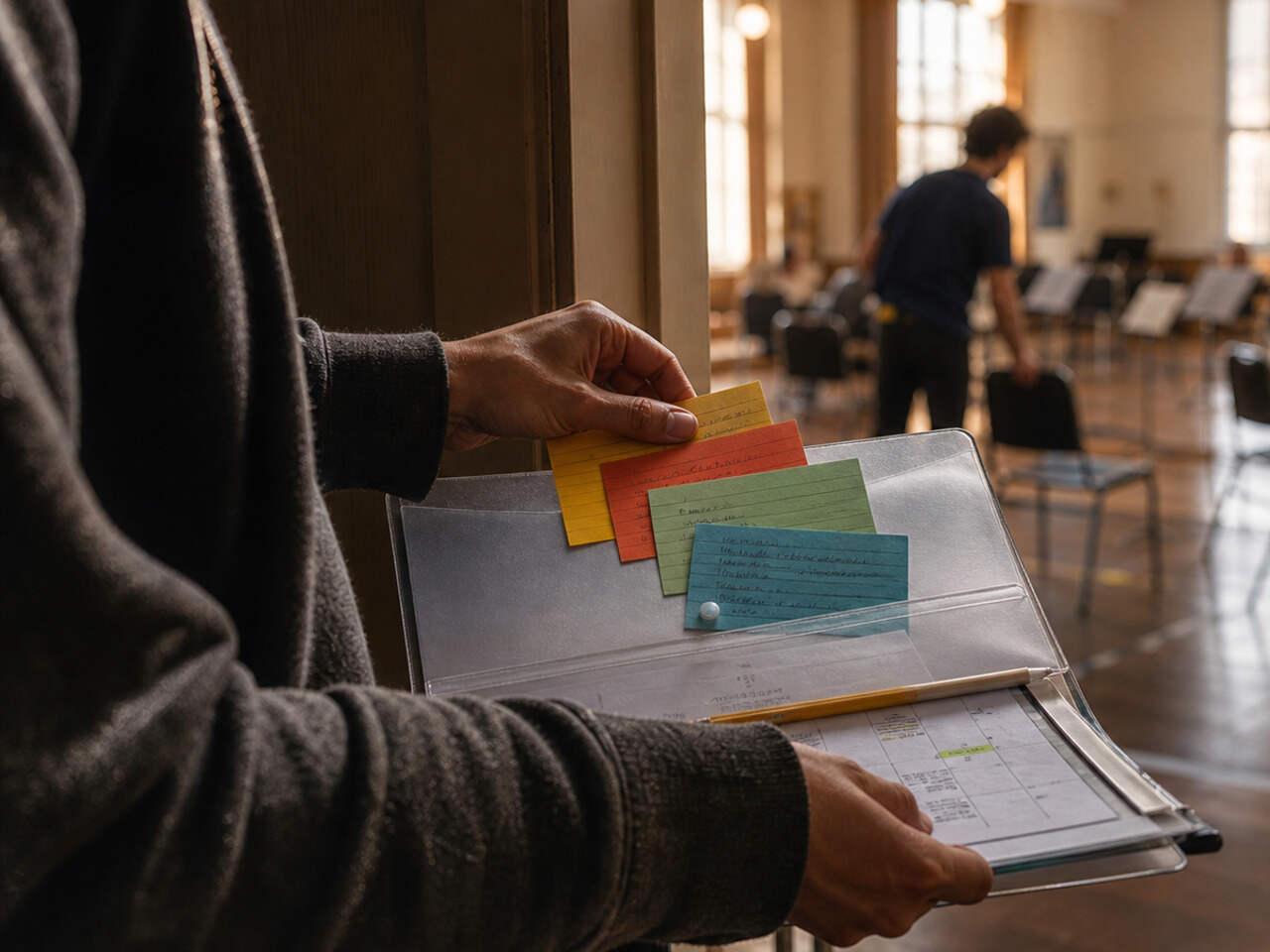
Cue-only testing: Write out only your cue lines — the last word or phrase before each of your lines — and try to deliver your response from cue alone. If you can do this cleanly, you're actually off-book. If you can't, you're relying on the flow of the scene to carry you, which breaks down under pressure in the room.
For the drama school workflow approach, the goal is to get to cue-only testing at least two days before class — which only works if you've done the scene-by-scene groundwork earlier in the week.
However you run it, the rule that separates a real test from a fake one is simple: you must not be able to see the next line while you're producing the current one. Even a sliver of the page in peripheral vision turns the test into recognition. Cover fully, reveal only after you've committed to the line out loud.
Before your first test session, it also helps to have your scene analysis sorted. The scene study checklist gives you the decisions to make before you start drilling — knowing your character's objective and the scene's temperature makes memorization faster, not slower.
Do it in HitCue
- Blackout mode: hides your lines one at a time — test yourself against each cue without accidentally reading ahead or relying on context.
- Character focus view: shows only your character's lines in the scene, so you can run your part without scrolling through the full script.
- Scene navigation: jump directly to the scene you're drilling without scrolling through acts — keeps short sessions focused and efficient.
Import your scene, assign your character, and run your first Blackout test two days before class — not the night before. → Download HitCue