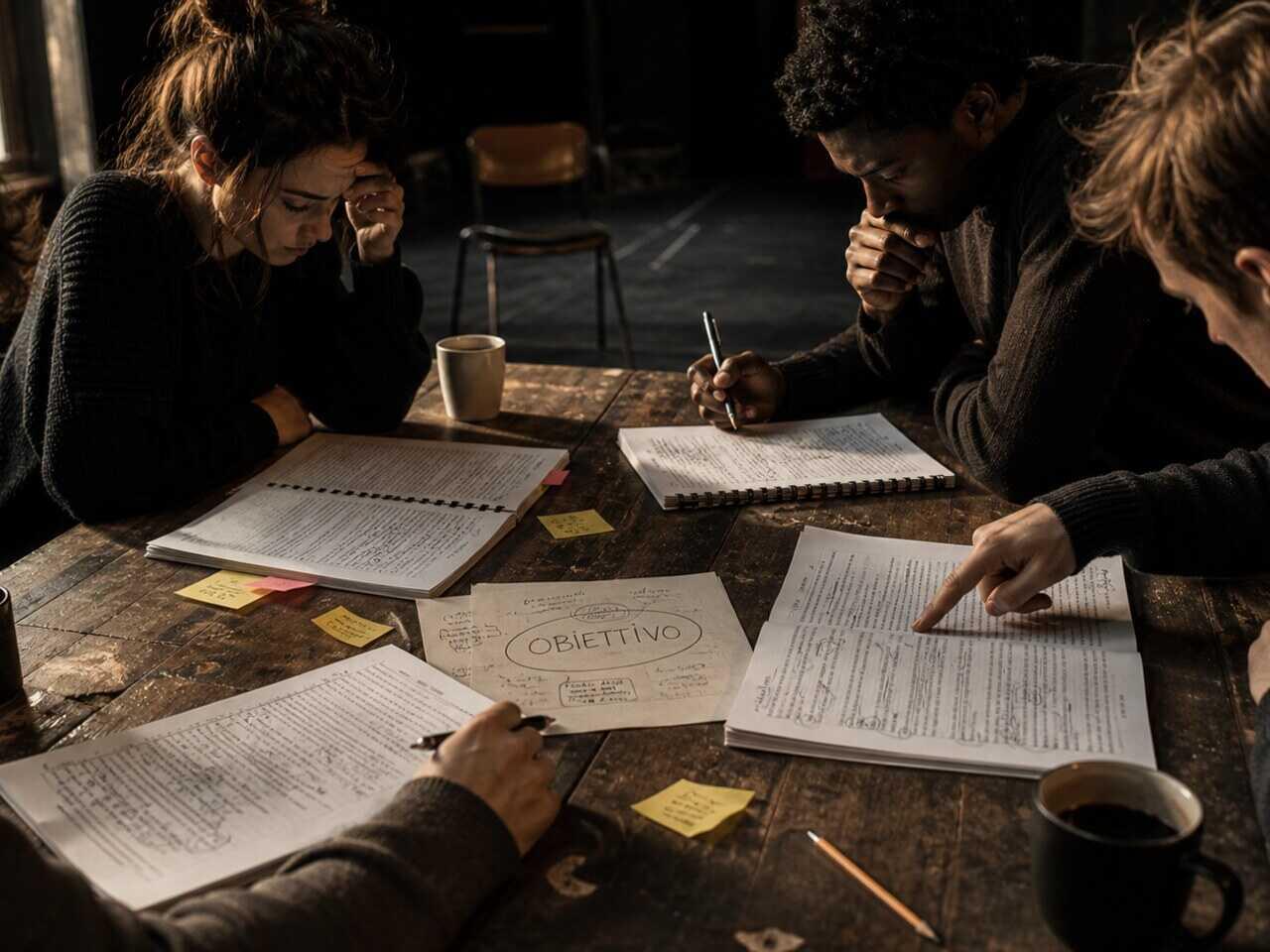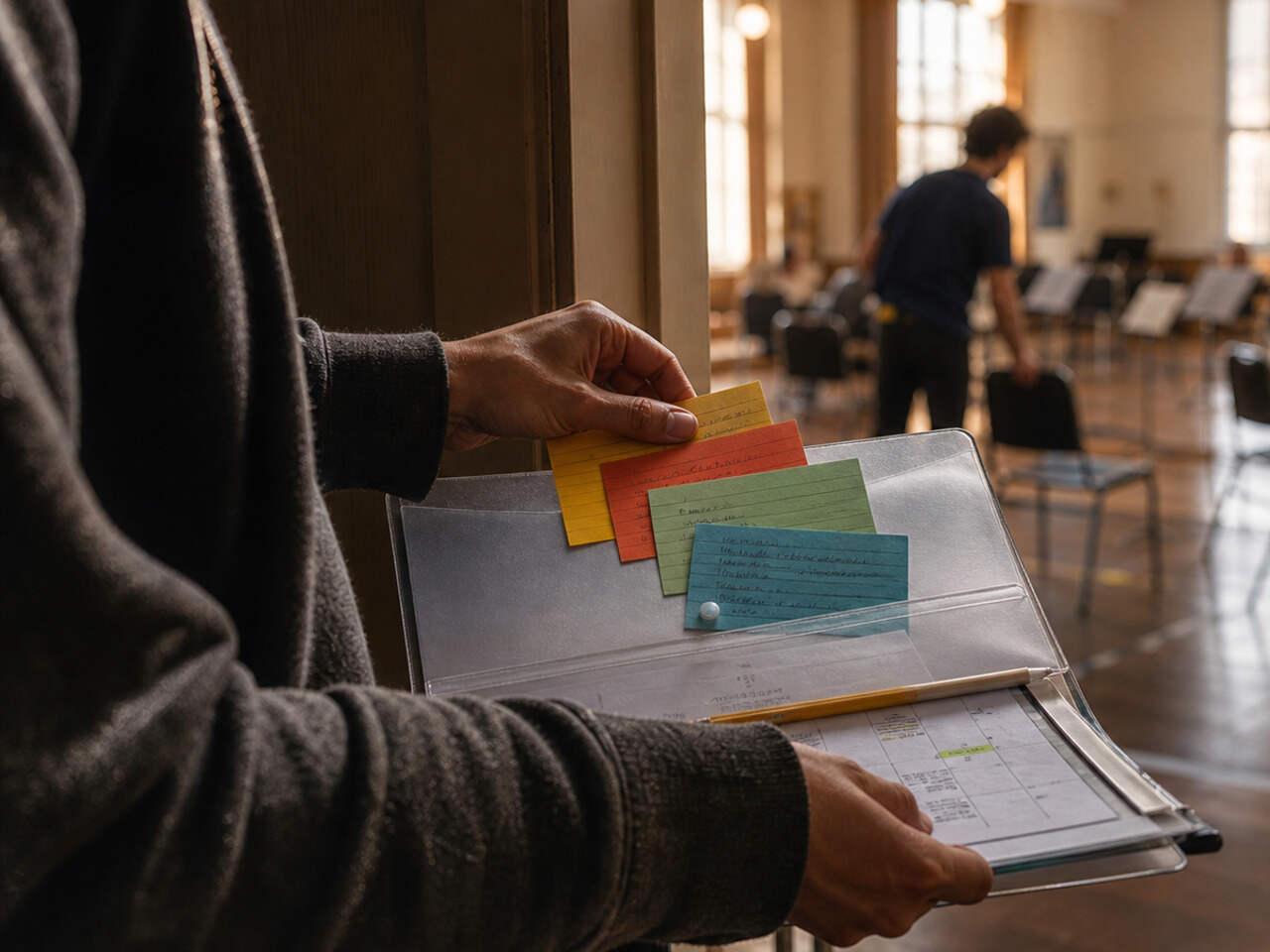
At a table read, four kinds of notes are worth capturing: director signals, character questions, cue and sequence notes, and scene temperature. Most actors walk out with half a page of scattered impressions — no structure, no categories, and nothing they can turn into a study plan that night. This article gives you a system built around those four categories: what to capture in each one, how to sort it within 24 hours, and how to use it to weight your study schedule before blocking starts.
What the Table Read Reveals That First Blocking Doesn't
By the time you're on your feet blocking, a lot of interpretive decisions have already been made. The table read is when the director sets the compass: what the play is about, what they're prioritizing in each scene, and how relationships land in this production. Choices that feel obvious later were often signaled here first.
If you treat the table read as a passive listening session, you'll spend the first two weeks of blocking catching up to things that were in the room all along.
Two things happen at a table read that don't happen anywhere else:
- You hear the whole play in sequence, usually for the first time with the full cast. Rhythm, pacing, and scene temperature become audible in a way they aren't when you're reading alone.
- The director reacts in real time to what they hear. These reactions are directorial data — they reveal what they care about before the blocking conversation begins.
The goal isn't to transcribe the session. It's to leave with four kinds of notes that each do a specific job in your rehearsal prep over the following weeks.
Four Categories of Notes That Pay Off Later
Set up your page in four sections before the table read starts. Capturing in categories during the session means you spend less time sorting afterward.
1. Director signals
Anything the director says about tone, style, relationship, or the world of the play. Even an offhand remark — "this scene needs to feel rushed, there's no time" — is worth writing down. These are the interpretive constraints that shape every choice you'll make before blocking. If you miss them now, they're hard to recover later from anyone else in the room.
2. Character questions
Everything you don't understand yet: why your character says this particular line here, what the relationship dynamic actually feels like from their side, what they're trying to avoid in a specific scene. Don't try to answer these during the read. Just flag them. Questions that surface in sequence are usually the ones that need research or a direct conversation with the director — not assumptions you make alone at your desk.
3. Cue and sequence notes
Your entrances, exits, and what triggers your first line in each scene. The table read is often the first time you hear your cues land in context. If a cue is shorter or longer than you expected — or if your entrance comes right after a dense monologue at high emotional pitch — write it down. You'll need this picture when you start working lines alone without a partner across from you.
4. Scene temperature
For each scene you're in, one quick read: pace (slow/fast), energy (high/low), register (tense/light/guarded). It doesn't need to be precise. It's a first impression you'll compare against what you discover in blocking — and a useful anchor when you're drilling later and need to remember what state you're entering a scene with.
A working format that keeps all four categories together:
| Scene | Director signals | Character questions | Cue notes | Temperature |
|---|---|---|---|---|
| Act 1, Sc. 2 | "She already knows" | Why is she still hiding it? | Enter after phone call | Tense, slow |
| Act 2, Sc. 1 | "This is the real turn" | What broke between them? | First line follows silence | Fast, guarded |
How to Convert Notes Into a Study Plan Before Your Next Rehearsal
Notes that stay in a notebook don't do anything. Here's how to process them within 24 hours of the table read.
Sort by action type:
- Director signals → attach to each scene as interpretive constraints. These need to be accessible when you're drilling lines, not buried in a separate notebook you open once and forget.
- Character questions → mark each as "research needed" or "bring to director." Don't try to answer interpretive questions in isolation if they'll affect your blocking choices.
- Cue notes → file by scene and fold them into your off-book prep. Knowing your cue sequence before you start drilling alone means you won't stop mid-drill to reconstruct what just happened before your entrance.
- Scene temperatures → use as a quick reference during study. Knowing you're entering Act 2, Sc. 1 at high tension and fast pace tells you something about the work before you've drilled a single line.
Assign study weight to each scene:
After the table read, you'll have a clearer picture of which scenes are heavier: more complex cue sequences, multiple director interventions, several open character questions. Use that to adjust your study schedule. A scene that triggered three director notes and two of your character questions needs more preparation time than a clean scene with a single clear objective. Prioritizing this now, before blocking starts, is one of the core habits the table work cluster is built around.
One specific question per unclear scene:
Don't arrive at first blocking with a general sense of confusion about a scene. Arrive with one concrete question. "What does she want from him in this moment, and why won't she ask for it directly?" gets answered in two minutes. "I'm not sure about this scene" gets you a long discussion that may not help.
Wherever you keep them, attach these notes directly to the scene they belong to — that's what makes them useful. A director signal pinned to Act 2, Sc. 1 surfaces the moment you open that scene to drill; the same note on page three of a notebook gets read once and never again. The test is whether a note finds you at the right moment without you having to go looking for it.
The structure you build at the table read — notes sorted by scene, questions flagged, temperatures noted — is what your first rehearsal checklist depends on. Without it, the checklist is a list of empty boxes.
Do it in HitCue
- Scene notes: pin director signals and open questions to each scene — so they surface when you drill, not when you go looking for them in a separate notebook.
- Character notes: log what you don't understand yet per character, traceable from the table read all the way through off-book work.
- Character page: build out objectives, relationships, and emotional arc as decisions crystallize — one place for everything that shapes how you play the role.
Import your script and attach your table read notes scene by scene before first blocking. → Download HitCue