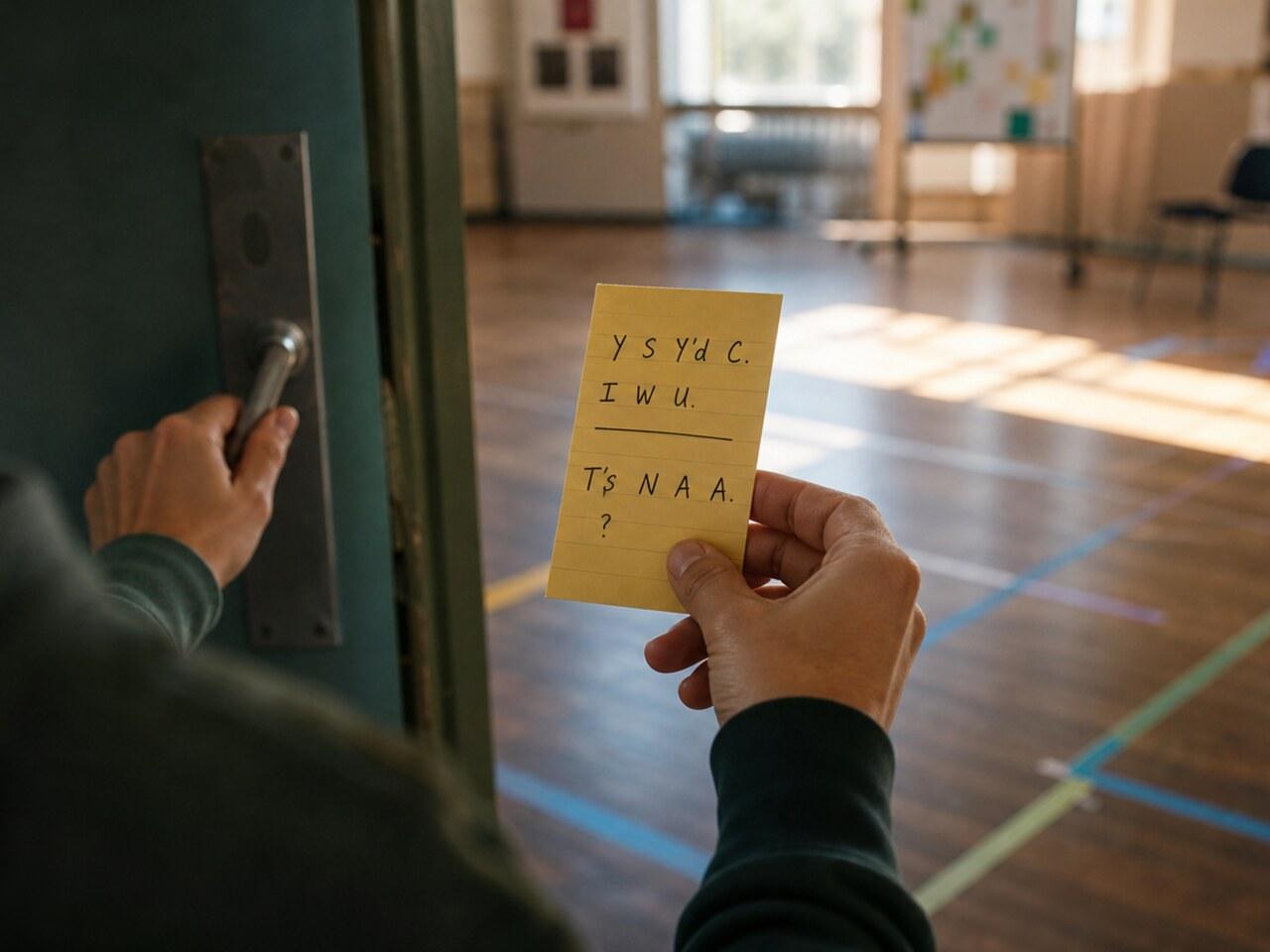
Community theatre rehearsal etiquette isn't really about manners — it's about preparation standards. With only two or three evenings a week for six to eight weeks, the cast can't absorb the time an underprepared actor costs the room. Three standards carry almost all of it: be off-book when the room expects it, work from the one current version of the script, and don't make eleven other people wait on your prep. Miss them and it shows in specific, avoidable moments — a wrong line, a week-old PDF, a blocking note nobody wrote down.
Being Off-Book Is a Standard, Not a Suggestion
The off-book deadline in community theatre is often looser than in professional productions. A director says "aim to be off-book by week four" and half the cast treats it as a suggestion. It isn't. When one actor is still holding a script while everyone else works without it, the room stalls every time that actor loses their place.
There are three stages actors move through before a scene is truly off-book:
- Script in hand: you have it available but aren't reading continuously. Normal during first read-throughs and early blocking.
- Script on chair: it's nearby but you're attempting to work without it. This is where most people stay too long.
- Truly off-book: the script is off the stage entirely. You call "line" when you need a prompt, and someone gives you the first few words. That's it.
The case that costs the room most isn't the actor who honestly calls "line." It's the actor who's confidently wrong — who paraphrases the text, delivers the gist, and barrels on. Calling "line" costs three seconds and a prompt. Calling a line incorrectly sends your scene partner the wrong cue: they don't know whether to correct you, wait, or pick up, and the scene derails while everyone works out what just happened. Approximate is not off-book. If you can't deliver the exact text on the exact cue, you're still on book — you've just stopped admitting it.
That's why you test yourself on cue lines — the last line or action before you speak — rather than running your own lines in isolation. If your line is "We should have left an hour ago," the real test is whether it lands reliably when you hear the cue "There's still time." Cue first, response second. Hesitate on the cue and you're not off-book yet, even if the speech feels fluent alone.
Work backwards from your company's deadline. If you're expected off-book by week four of an eight-week schedule, the remaining weeks are for building the scene — not patching the text. The community theatre rehearsal guides cover how to structure evening-only study time around the production schedule.
One Script Version Is a Standard, Not a Courtesy
Version fragmentation is one of the quietest sources of wasted rehearsal time. The director makes cuts. Dialogue gets rewritten. Twelve cast members carry twelve different PDFs from twelve different moments in the process. By week six, nobody's sure which version is current — and the person opposite you is sometimes working from a different text than you are.
The concrete failure: you drilled all week from the PDF the director emailed in week one. In week three a scene was cut and two speeches rewritten, announced to whoever was in the room that night — and you weren't. You arrive off-book on lines that no longer exist, hand your partner a cue they don't have, and the director spends rehearsal re-explaining a change already made. The old PDF didn't just waste your week; it cost the room a scene.
Three rules that prevent it:
- Use only the version the director or stage manager distributes. If there's a shared folder, a cast link, or a designated file, use it exclusively. Don't annotate an older printed copy once a new version has been issued.
- Mark changes before you leave the room. When lines change during rehearsal, update your script that night. Memory at the end of a rehearsal evening is unreliable, and a misremembered change compounds over the following sessions.
- Ask before you rephrase. If a line feels unnatural and you think a small change reads better, raise it outside rehearsal time. Don't quietly adjust your delivery and expect your scene partner to adapt.
If your company has no clear system for distributing the script yet, how to share a script with your cast covers practical, rights-safe options for getting everyone on the same version from day one. The practical test for any method: when a cut is made, does the corrected text reach the whole cast without anyone re-sending or re-downloading a file? One live source beats twelve synced copies.
The Preparation-Standards Checklist
None of this is about being polite. It's about not being the reason the room slows down. Two failures show up more than any others — so handle these first.
Late arrival. A 7pm call means warm and ready at 7, not walking through the door at 7. Ten actors idling while one parks costs more collective time than almost any mistake made on stage. If you're running late, text the stage manager — not the director, who's mid-setup.
Missed blocking notes. "Cross down-left on the second line" is obvious tonight and gone by Thursday. Blocking you don't capture the moment it's given is the note you relearn next week while everyone waits. Write it in the script, tied to the scene, before the next scene is called.
Then hold the rest as standing habits:
Before each rehearsal:
- [ ] Know which scenes are scheduled — check the plan in advance, not on arrival
- [ ] Run those scenes cold before you leave home: your lines, not your lines-at-the-table
- [ ] Bring your script, a pencil, and any props or costume pieces you've been asked to carry
- [ ] Arrive at least ten minutes early — warm before the first scene is called
- [ ] If you're running late, text the stage manager
During rehearsal:
- [ ] Take blocking and direction notes in pencil, in the same copy you rehearse with
- [ ] When you call "line," listen to the full prompt before restarting — don't race through it
- [ ] Don't run side conversations while other scenes are worked; a note to another actor may also apply to you
- [ ] Take a correction and move on — over-apologising costs more time than the original slip
After rehearsal:
- [ ] Clean up blocking notes in the current script before the next session — don't trust memory across a week of full days
- [ ] Flag any note you didn't understand and ask before the next rehearsal, not during it
- [ ] Review the scenes you struggled with; a second stumble at the same point costs the room twice
Setting these standards in week one is far easier than correcting them in week five. Agree on them as a cast up front — they work best when everyone holds the same bar.
Do it in HitCue
- Blackout mode: test each scene cue-first before rehearsal, so you arrive able to deliver the exact line on the exact cue instead of approximating it in the room.
- Share script link: keep the whole cast on the one current version, so nobody spends a week drilling a PDF that's already been cut.
- Shared notes: attach blocking and line notes to the scene they belong to, so the whole cast has them — not just whoever managed to write them down that night.
Share the current script with your cast, then run a cue-first Blackout check before the next rehearsal. → Download HitCue