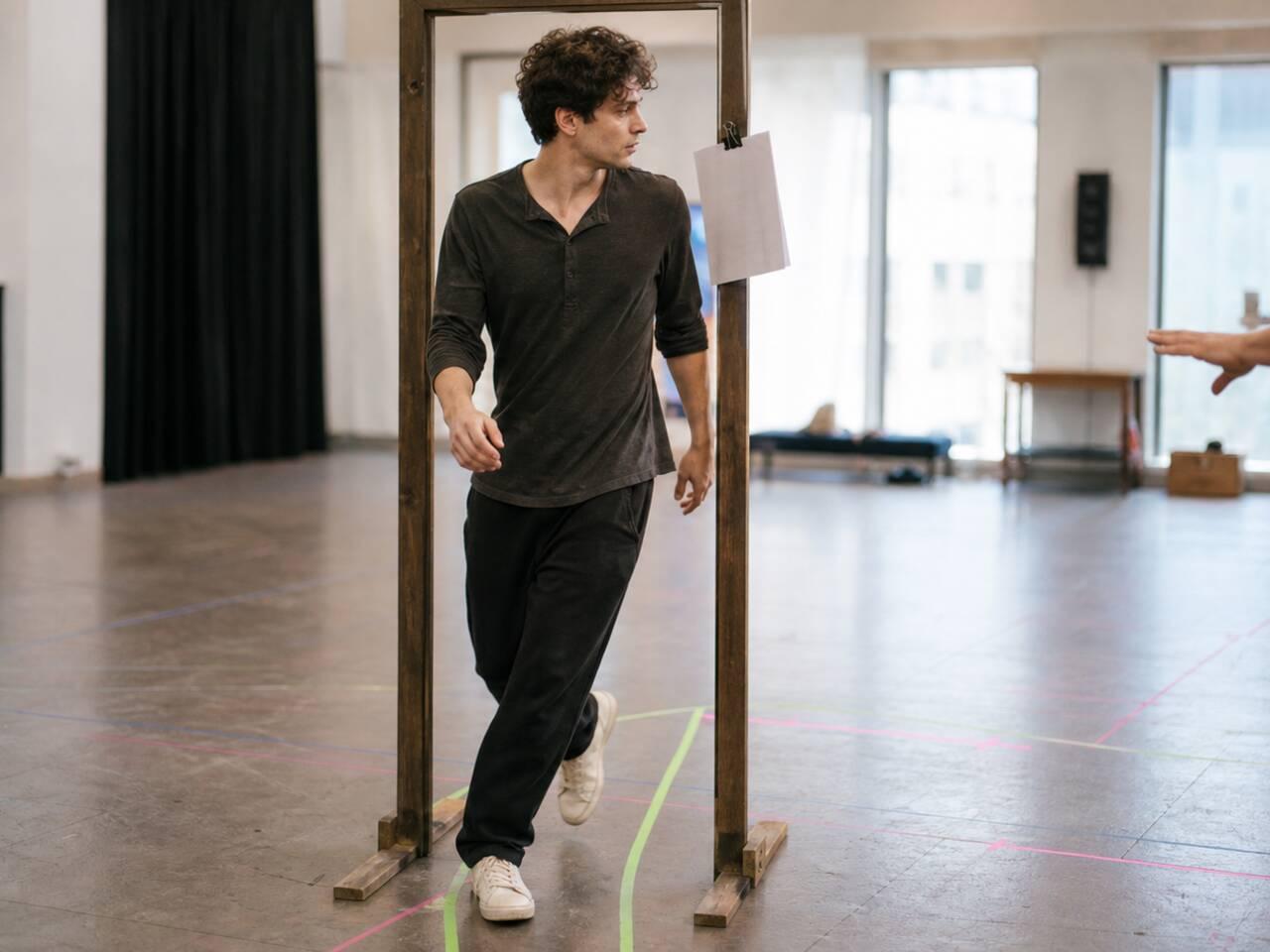
A stage direction on the page can be three different things, and they all look the same in print. Some are actions you play — a cross, an exit, a slammed door. Some are the playwright writing atmosphere for a reader. Some are blocking left over from an old production that has nothing to do with yours. Your first job isn't to obey them. It's to sort each one into mark, ignore, or ask — because the staging in your rehearsal room, not the italics, decides what you actually do.
Why You Sort Stage Directions Instead of Obeying Them
The rule that saves you: a printed direction is a proposal, not a command. The staging worked out in your room always outranks the text on the page. That's not disrespect for the playwright — it's how theatre works. The same script gets staged a hundred different ways, and the directions can't all be right for all of them.
Every printed direction falls into one of three kinds:
| Kind | Example on the page | Your move |
|---|---|---|
| Playable action | "He locks the door and pockets the key." | Mark it, then check it against your blocking. |
| Reader atmosphere | "The room holds its breath." | Read it for tone. Don't try to play it literally. |
| Legacy blocking | "She sits, stage left, under the window." | Flag it. It may be another production's staging. |
That third row is why sorting matters. Some licensed editions still carry staging from an earlier production — details that describe how one cast moved on one set, not how you'll move on yours. You usually can't tell those apart on sight, so treat any specific staging detail as something to verify against your own rehearsal room, not a rule to follow because it happens to be printed.
What to Mark: Directions You'll Actually Play
Mark anything that puts your body somewhere or your hands on something: entrances, exits, crosses, physical contact, a prop picked up or set down. These are the directions with real consequences for a scene, and missing one means colliding with someone else's cue.
But marking isn't the same as committing. Every action mark stays provisional until blocking confirms it. Use one mark for "action to stage" and add a second — a tick, a box — the moment your director confirms it, so an unconfirmed cross never looks identical to a locked one on your page. If you already have a marking vocabulary, how to mark up a script covers the full set for cues, beats, and questions; the point here is narrower — an action mark is a question until staging answers it.
Here's a first pass on a short original exchange:
NOAH: (not looking up) You could have called. PRIYA: I'm calling now. (She sets the case down by the door.) NOAH: (pouring a drink at the cabinet) A week, Priya. A whole week.
- "(not looking up)" — playable and tonal at once. You can play it, and it tells you the temperature between them. Mark it and keep it.
- "(She sets the case down by the door.)" — a playable action with a prop and a position. Mark it, then confirm the case exists and the door is where you'll actually put it.
- "(pouring a drink at the cabinet)" — playable, but only if your set has a cabinet. If it doesn't, this is legacy blocking wearing an action's clothes. Flag it.
What to Ignore: Directions Written for the Reader, Not the Actor
Some directions exist for someone reading the play in an armchair. You can leave them on the page:
- Directions describing the audience's experience, not your action: "the tension becomes unbearable."
- Directions naming a feeling as if it were a move: "she is devastated." Playing "devastated" as a face is indicating — play the action underneath it instead.
- Directions naming a set piece or exit your production doesn't have — the ghost cabinet from the scene above.
The failure mode here isn't ignoring too much. It's honoring too much. An actor who tries to perform every printed direction ends up pouring drinks at a cabinet that isn't there and wearing "devastated" as an expression instead of playing the want under it. Two rules keep you clear: when a direction asks for a feeling, convert it into an action you can actually play; when it asks for a set piece you don't have, drop it until someone confirms it's coming back.
What to Ask: Directions Only the Director Can Settle
A direction you flagged is a question, not a decision. Bring the specific ones to the director, and cite the line so the answer takes one sentence:
- "The script has me pouring a drink at a cabinet here — do we have that on set, or do I cut it?"
- "I set the case down by the door on this line. Is that where the door lands in our staging?"
- "There's a cross to the window that isn't in our blocking notes. Are we keeping it, or is it left over from the printed edition?"
Specificity is the whole game. A director who hears the exact conflict resolves it fast. A director who hears "should I follow the stage directions?" gives you a vague answer, and you're back to guessing at the next rehearsal.
Do this sort across the entire script, not just the scenes you run most. The scenes you skip are exactly where an unconfirmed cross survives all the way to tech week and collides with a cue another actor is waiting on. Sorting early is what separates actors who walk into tech with clean, confirmed blocking from actors still arguing printed italics against real staging in the final week. The script annotation hub collects the rest of the marking systems that feed this pass.
Do it in HitCue
- Scene notes: mark each printed direction as confirmed staging or "ask the director" right on the scene, so nothing unresolved follows you into tech week.
- Character notes: keep the blocking your director actually confirmed for your character in one place, separate from whatever the printed edition staged.
- Scene navigation: jump straight to any scene to re-check a flagged direction against your latest blocking without losing your place in the full script.
Import your script and note every stage direction as marked, ignored, or still-to-ask before your next run. → Download HitCue