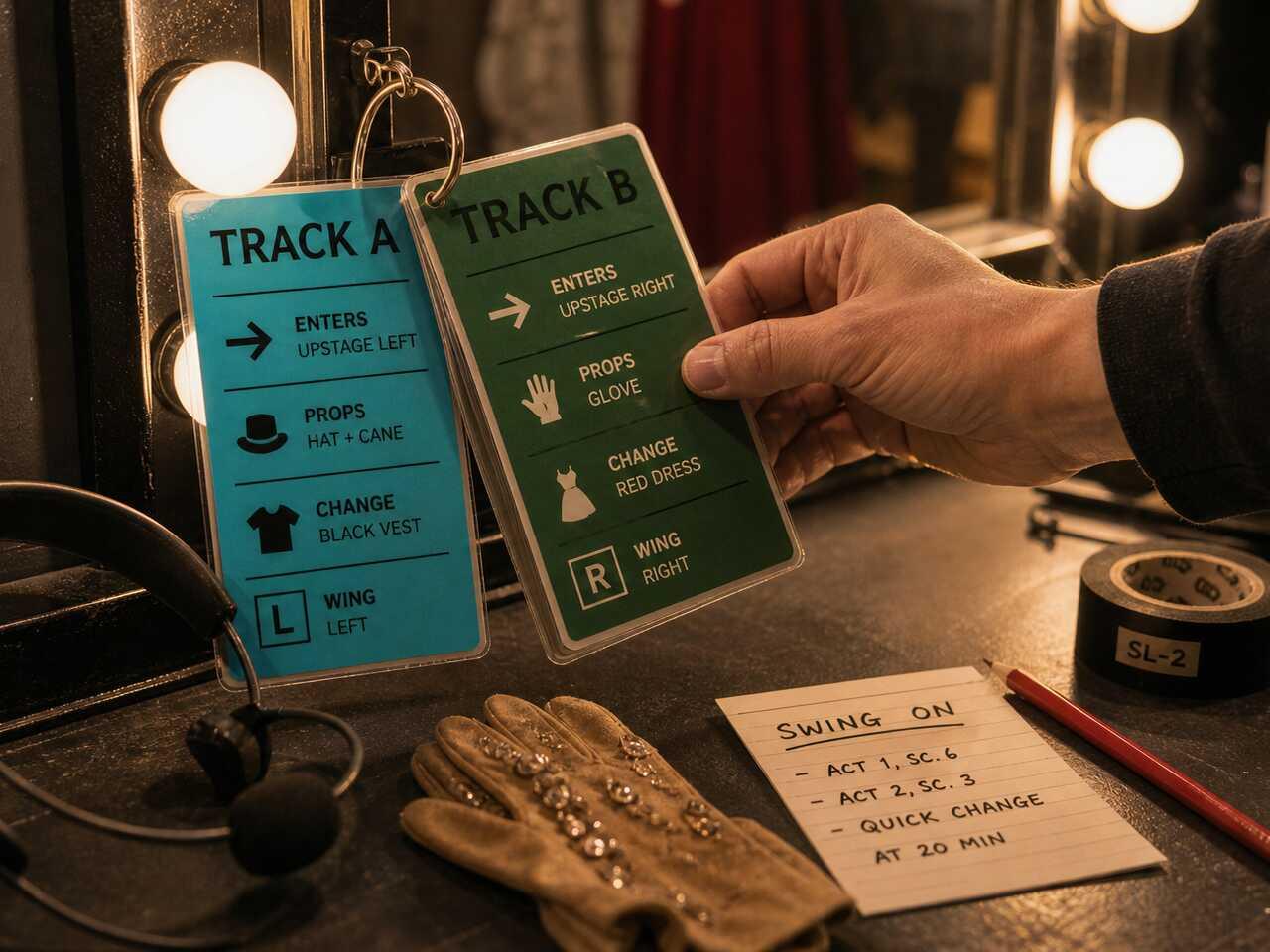
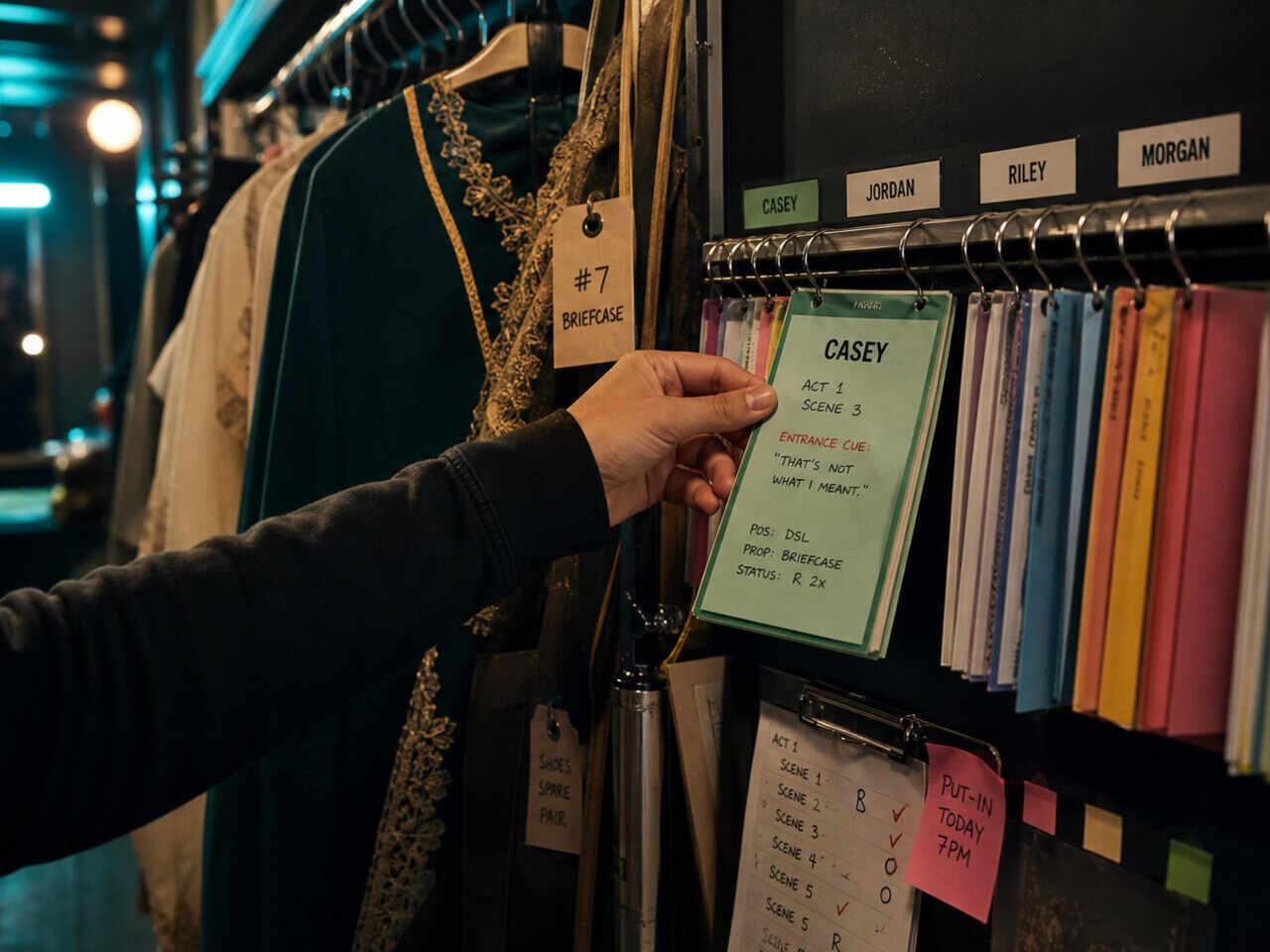
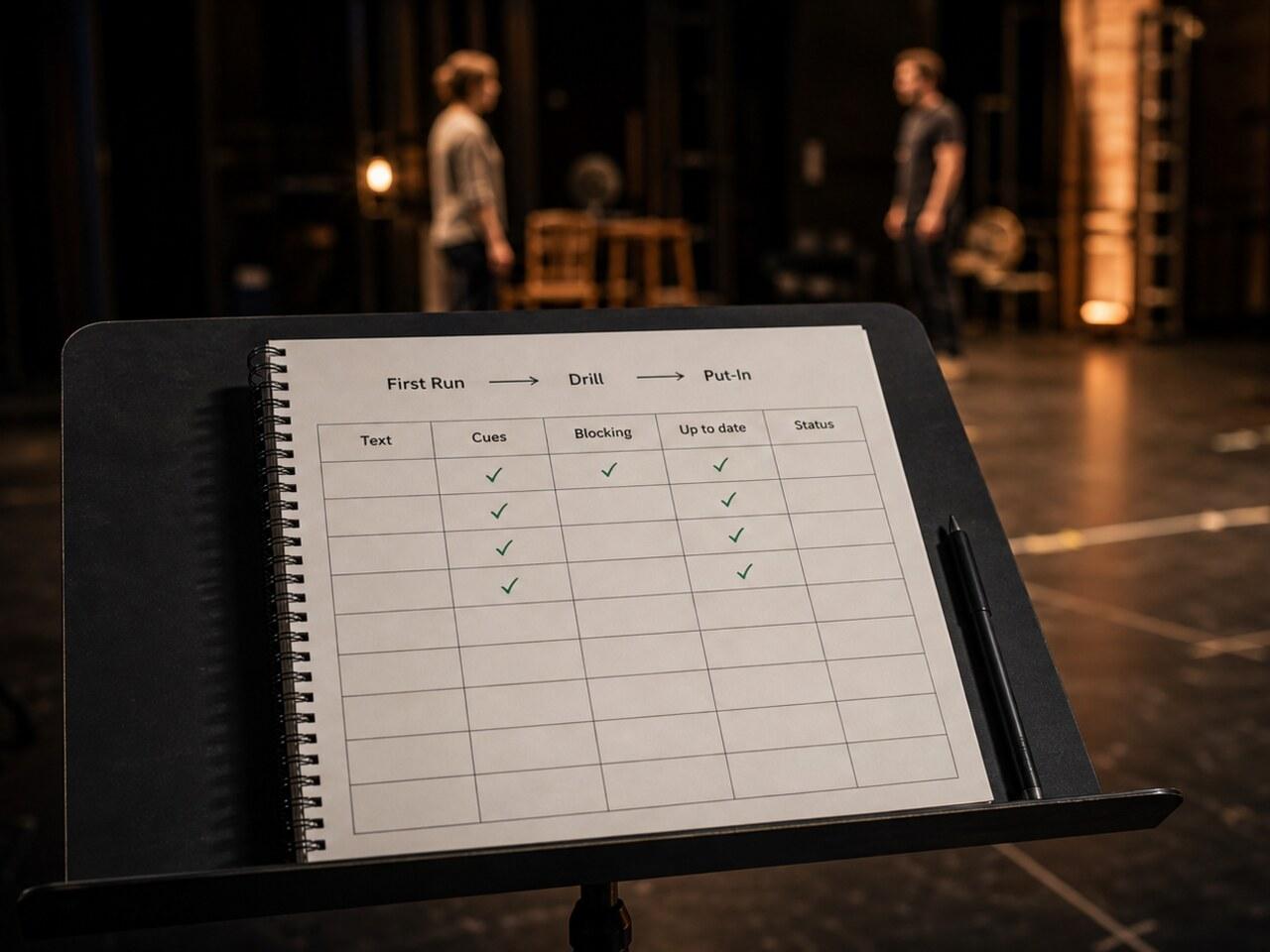
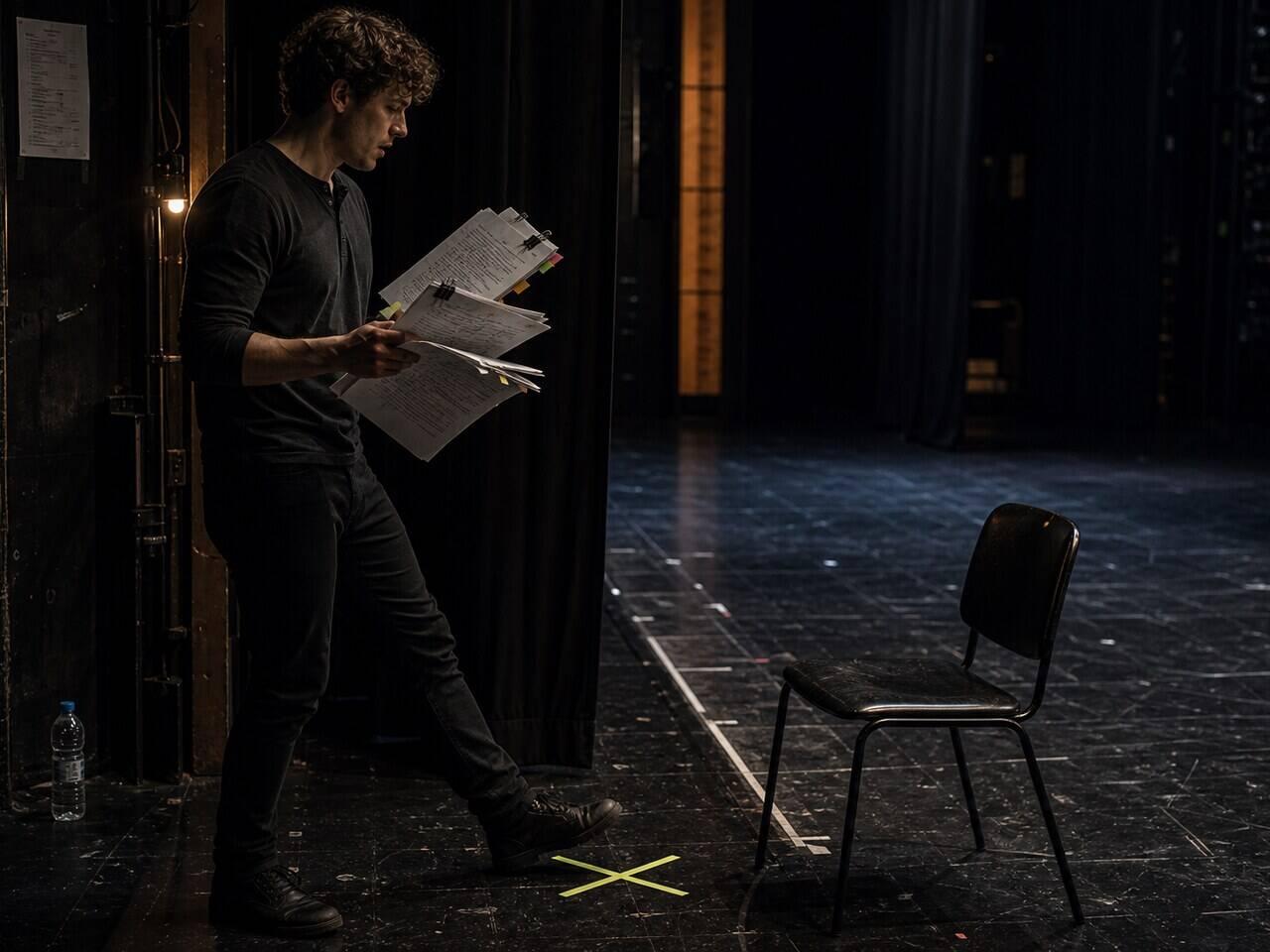
This hub is for actors who need an operational system for covering roles. The guides here separate the work into preparation, rehearsal tracking, swing bibles, cue-line drills, blocking notes, put-in readiness, and update routines. The emphasis is practical because understudy readiness depends on current materials, not general effort.
Start with understudy preparation if you are building your materials for the first time: clean script, separate notes per character, cue lines, and ready-to-go drills. Move to the rehearsal process guide once you are inside the production and need to track what changes from run to run. Use swing bible content when the problem is structure: you need one reliable source of truth for entrances, exits, blocking, props, cues, and role-specific notes.
Good understudy systems make ambiguity visible. Each covered role should have its own status, its own weak scenes, and its own current notes. "I worked on the show" is not enough. You need to know which character is solid in which scene, what changed in the last rehearsal, and what must be checked before you can go on.
The system should also survive short notice. When the call comes, you do not want to reconstruct your preparation from memory. You want to open the track, see the current weak spots, check the latest blocking notes, and run the highest-risk cues first. That is why this category treats readiness as a maintained workflow, not a one-time preparation sprint.
Every guide here should make that last-minute check clearer, faster, and less dependent on memory when the production is already moving.
Use This Hub When
Use these guides when you are covering a role, building a swing track, preparing for a put-in, or trying to keep multiple characters separate. If your main issue is memorizing one role, use Memorization. If your main issue is a deadline, use Off-Book Planning. If your main issue is marking objectives and choices, use Script Analysis.