Off-Book Planning & Rehearsal Scheduling

How to build a plan that gets you off-book on time — starting from your deadline, not from zero.

4 postsnewest first

Category Guides

Latest articles

Newest first

How to Go Off-Book Fast: A Two-Week Countdown Plan
Off-Book PlanningMay 12, 20267 min read

How to Go Off-Book Fast: A Two-Week Countdown Plan

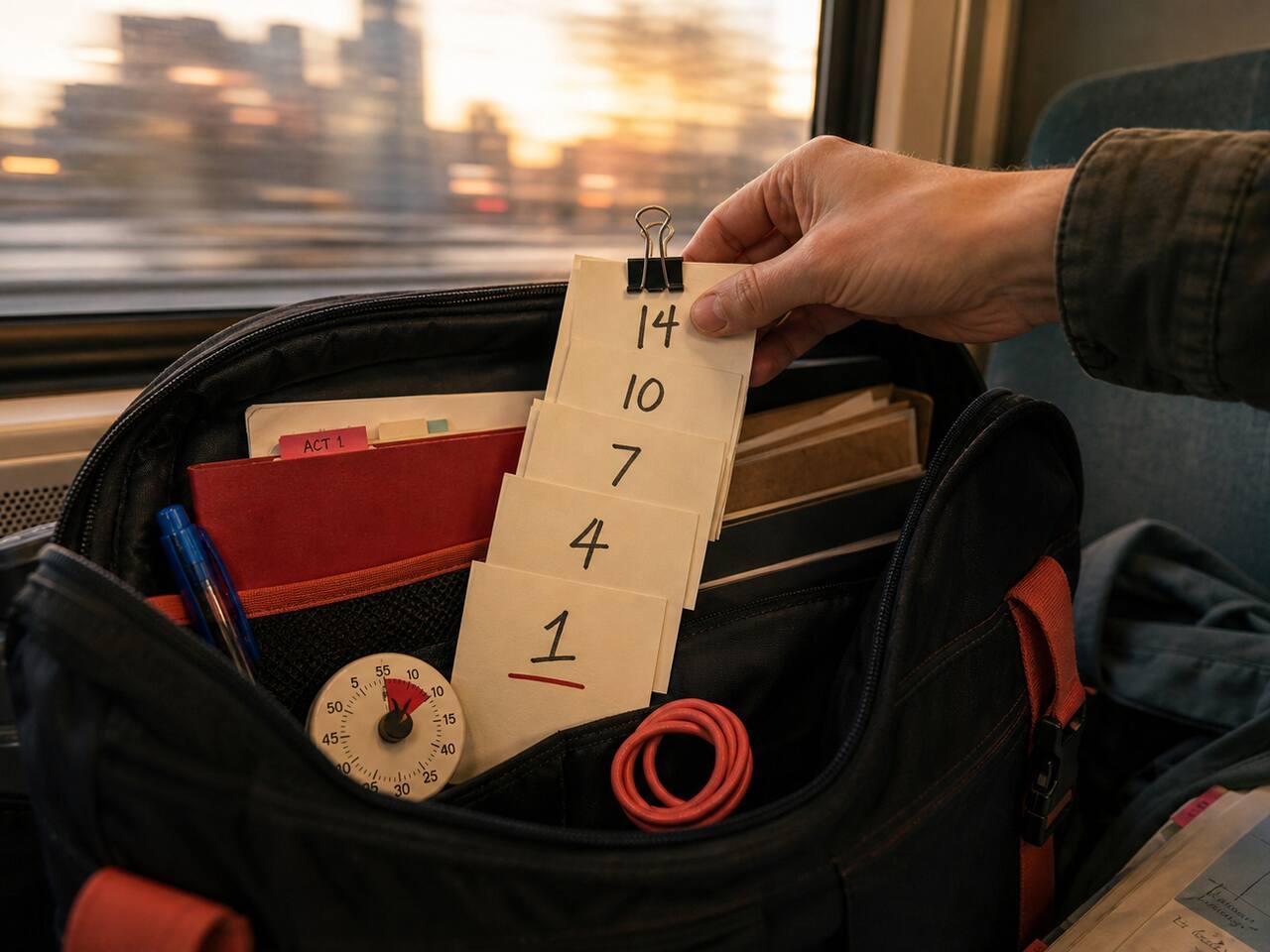
Going off-book fast doesn't mean running lines from the top every day until they stick. It means working backwards from your deadline — setting scene-by-scene gates you have to hit, not a schedule you hope to follow. Two weeks can be enough for a manageable role if you test as you go instead of waiting until the last night to find out what you don't know. This article gives you the countdown structure, the daily targets, and the test method to use at each stage.

  • Blackout mode: hides your lines one at a time during scene tests, so you're testing real recall from any entry point in the scene — not just reading through the page from the top.
  • Character focus view: isolates your character's lines and cues in each scene so you can drill the day's assigned scenes without scanning the full script.
  • Character statistics: tracks your progress scene by scene across the countdown, so you always know what's solid and what still needs a session.
Memorize Lines in 3 Days: The Emergency Off-Book Plan (No False Promises)
Off-Book PlanningApril 21, 20266 min read

Memorize Lines in 3 Days: The Emergency Off-Book Plan (No False Promises)

Three days is not enough time to memorize a full script the way you'd do it in a normal rehearsal process. It is enough time to get off-book for a defined set of scenes — if you stop repeating and start building. The plan below is not a trick. It compresses the same logic you'd apply over two weeks into three days. It works if you follow the sequence in order. It fails if you skip Day 1.

  • Off-book for the scenes in one act, if your days are mostly clear and the material isn't unusually dense
  • Off-book for two or three scenes in a class or studio context, even with a full day job
  • A solid working draft for a short piece — not a full-length production
When Should You Be Off-Book? A Planning Rule That Doesn't Backfire in Rehearsal
Off-Book PlanningApril 13, 20266 min read

When Should You Be Off-Book? A Planning Rule That Doesn't Backfire in Rehearsal

You should be off-book before blocking rehearsals lock in — not at the first read-through, not the night before opening. The timing matters because going off-book too early puts you in your head about lines when you should be building interpretation, and going too late means you're managing memory when everyone else is refining work.

  • Blackout mode: run the deadline test on the scene that was blocked most recently, so you know whether the text holds after movement enters the work.
  • Character focus view: review your material around each entrance without letting the full page convince you a line is ready before it is.
  • Scene navigation: move through scenes in rehearsal order when you are setting the off-book date, instead of planning from page count alone.
Off-Book Rehearsal Plan: Build It From the Calendar Backwards
Off-Book PlanningApril 8, 20267 min read

Off-Book Rehearsal Plan: Build It From the Calendar Backwards

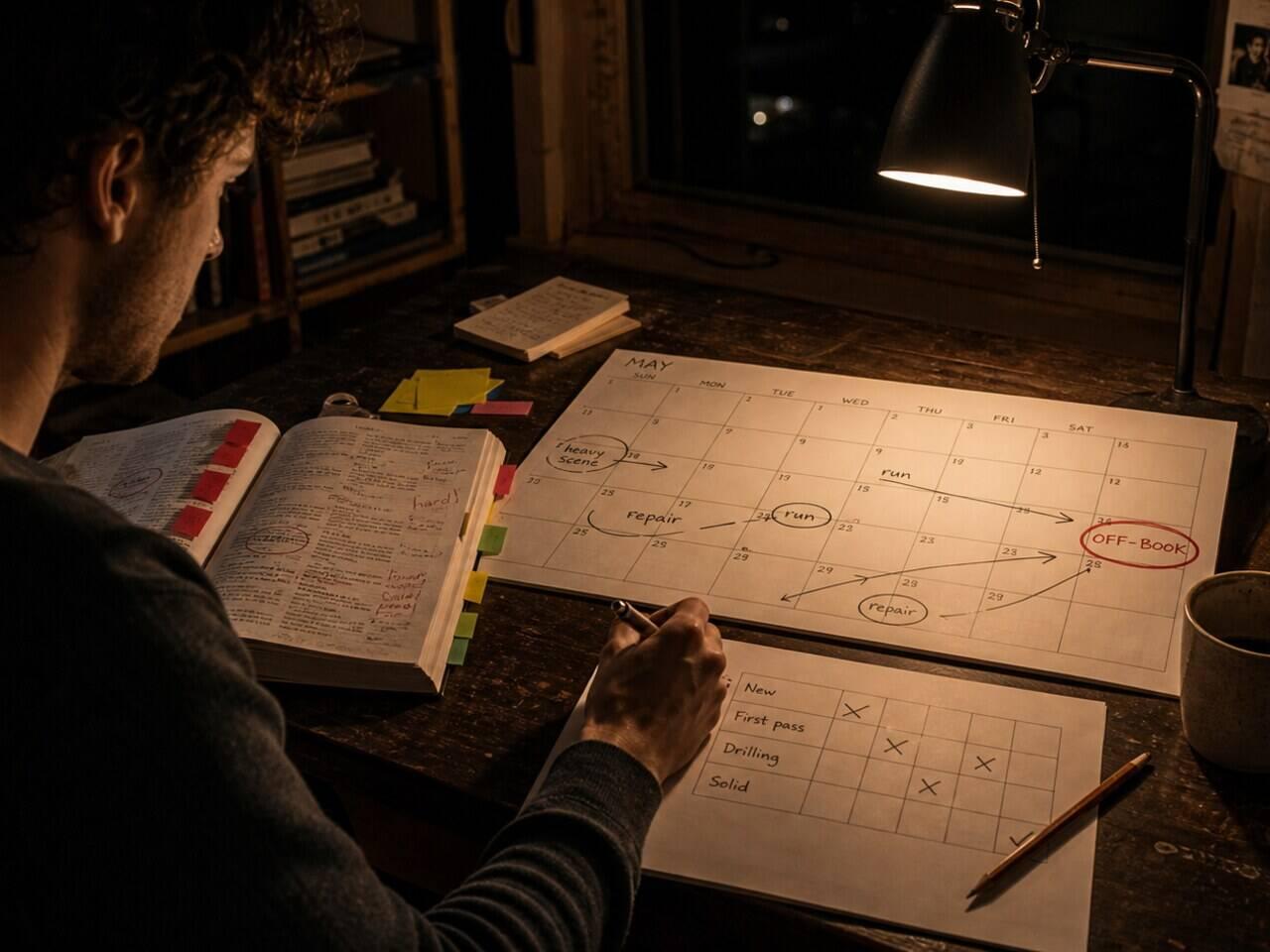
Start from the deadline, not from page one. Most actors open the script and begin reading — which feels productive but gives you no way to know if you're on track until it's too late. An off-book rehearsal plan built backwards from the calendar tells you what to memorize this week, what to consolidate next week, and when to run full scenes. Without it, you're guessing until opening night.

  • Day 1–2: First pass on the week's scenes — read aloud, identify which lines feel uncertain and which cues feel weak
  • Day 3–4: Cue-first drills — take the line immediately before each weak line, speak it aloud, then respond without looking
  • Day 5: Blackout pass — cover your lines entirely, work through the scene one line at a time, tap to reveal only after answering